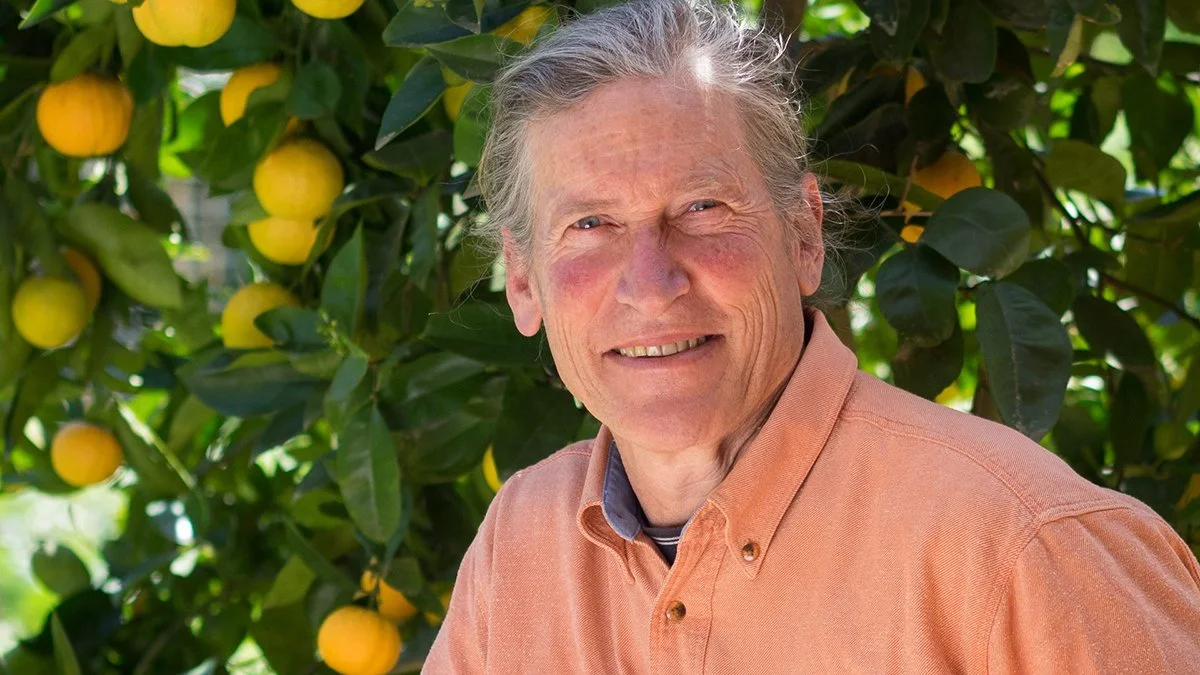
Few figures have had a greater influence on contemporary ecological thinking than David Holmgren.
Best known as the co-originator of permaculture alongside Bill Mollison,David Holmgren helped develop a design system that has shaped generations of growers, builders, educators and communities around the world. First introduced in Permaculture One in 1978, permaculture proposed a practical response to environmental crisis by designing human settlements that work with, rather than against, natural systems.
Over the decades, Holmgren has expanded those ideas through influential works including Permaculture: Principles and Pathways Beyond Sustainability and RetroSuburbia, while living the principles through decades of hands-on experimentation at Melliodora, his home and demonstration site in regional Victoria. His work bridges ecology, energy descent, food systems, housing, community resilience and the cultural shifts required for a more viable future.
Ahead of his keynote appearance at the 2022 indoor EGA conference we spoke with David Holmgren in an interview originally conducted at the time about the counterculture of the 1970s, self-reliance, spirituality, psychedelics, useful plants, ritual, and why permaculture continues to find new relevance in uncertain times.
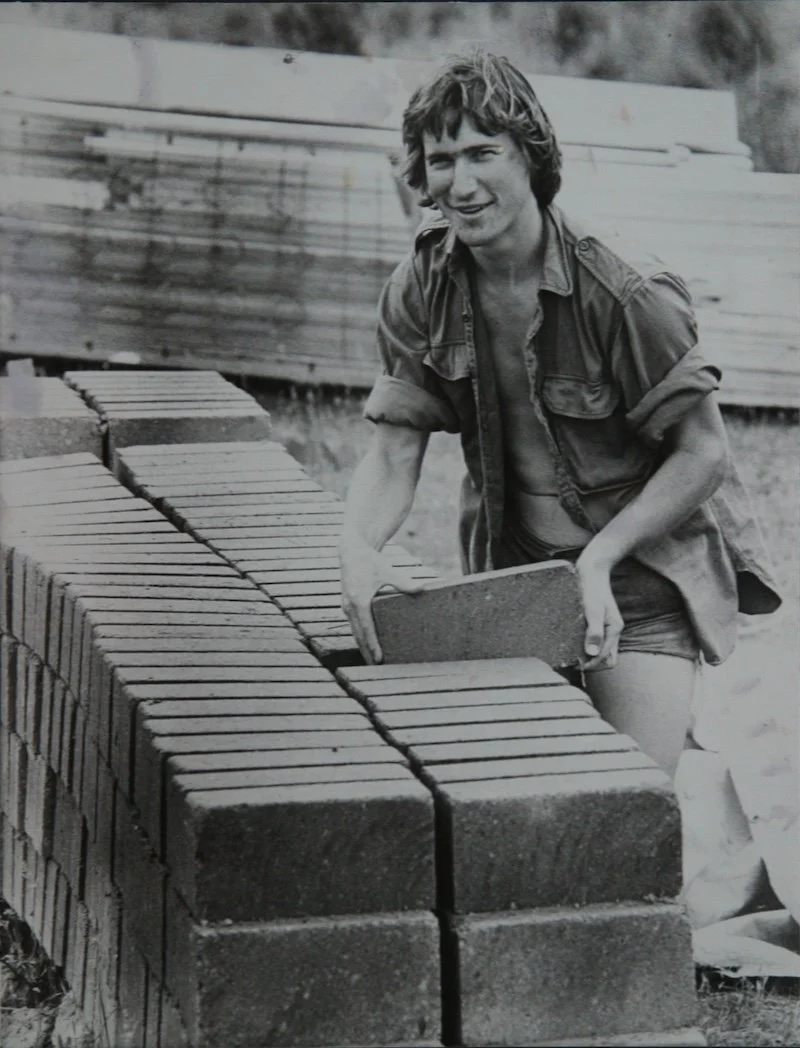
Making mudbricks, Jackeys Marsh Tasmania; press photo promoting the Down To Earth Festival, 1978:
EGA: David, thank you for speaking with us. Your work has shaped ecological thinking for decades. As co-originator of permaculture, your ideas have influenced communities across the world. Looking back, how does it feel to reflect on that legacy?
David Holmgren: Well, permaculture has certainly filled my whole adult life, one way or another. It’s also striking to remember how young I was. I met Bill Mollison when I was 19, and Permaculture One was published in 1978 when I was only 23.
EGA: You grew up in Western Australia and later moved to Tasmania, where you studied Environmental Design. You’ve spoken before about feeling like an outsider even among radical designers and activists. What was that period of your life like?
David Holmgren: After finishing school in 1973, I caught the hitchhiking bug and immediately headed east. I spent the year travelling around Australia, including a lot of time in Tasmania, and developed a deep connection to the landscape. I also encountered people involved in this remarkable Environmental Design course, which eventually drew me there.
The course attracted radicals, dropouts and people disillusioned with mainstream architecture, planning and landscape design education. A lot of that was exciting, but I still felt my own interests were on the fringe of the fringe. I was intensely interested in ecology, yet many academically trained ecologists I met were reductionists. At the same time, ecology itself held the promise of a more holistic science, one that looked at whole systems rather than just isolated parts.
That tension stayed with me. I was always wary whenever new orthodoxies formed, even progressive ones. As soon as something becomes dogma, problems begin.
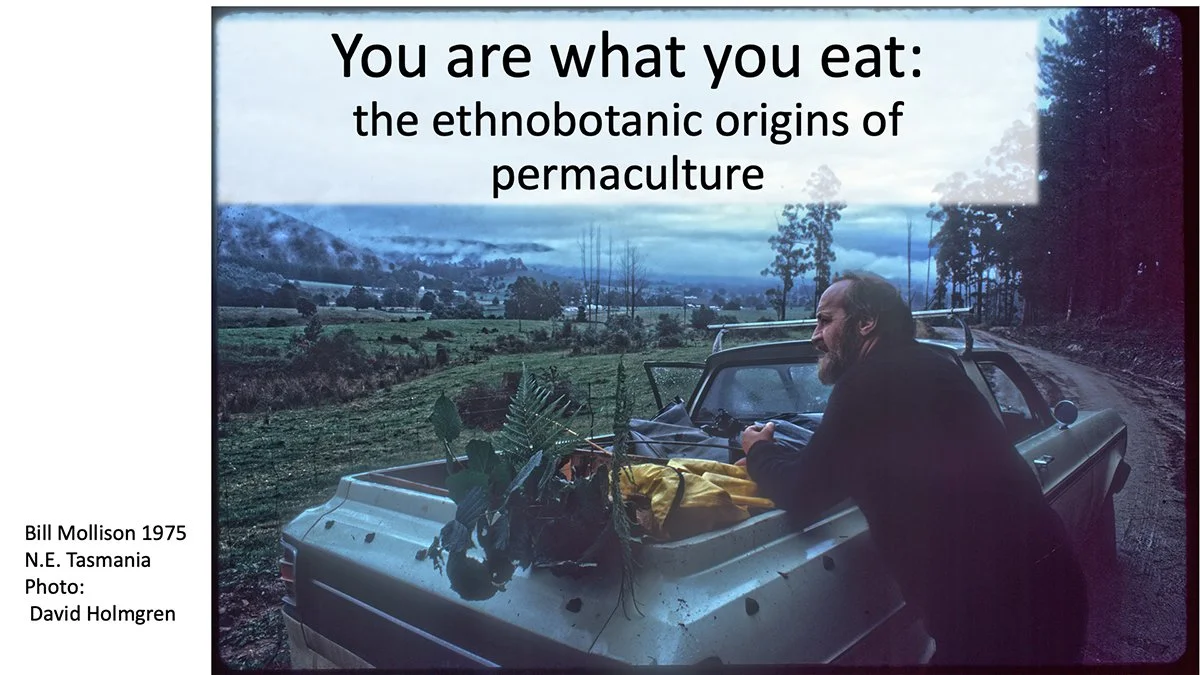
EGA: You’ve often spoken about the value of self-reliance and practical skills. Where did that emphasis come from?
David Holmgren: Meeting Bill Mollison was important, but so was meeting the wider community around him in Hobart. It was a bohemian scene that ranged from academics to shipwrights, builders and people who seemed able to make or repair almost anything.
That was deeply inspiring to me. I grew up with politically radical parents who thought for themselves, but if the plumbing broke, you called a plumber. As a child I wanted to understand how things worked and how to do them myself. In Tasmania I met people who simply got on with it. They built houses, boats, gardens, livelihoods.
That do-it-yourself spirit became a major part of my path. Rather than only resisting what was wrong in the world, it suggested another possibility: go and create the world you do want.
EGA: You met Bill Mollison at a time of major global uncertainty. How much did that historical moment shape permaculture?
David Holmgren: Enormously. I met Bill in 1974, just after the first oil crisis and not long after The Limits to Growth report. There was a growing awareness that industrial society might be running into real limits. Alongside that were back-to-the-land movements, new environmental publications and a broader cultural questioning of modern life.
Permaculture emerged from that atmosphere. It wasn’t created in a vacuum. It came from a sense that existing systems were ecologically unstable and that people needed practical alternatives.
EGA: Many people arrive at permaculture through environmental concern, but others come through spirituality or health. Have you noticed that too?
David Holmgren: Yes, definitely. Some people come through a growing spiritual awareness or a sense of connection with nature. Others come through concerns about health, food quality or more embodied ways of living. Usually those motivations overlap.
Health and spiritual wellbeing are part of what we call one of the petals of the permaculture flower. They are domains that also need redesign. Many people begin with personal wellbeing and then recognise the larger ecological and social connections. Others come from activism and realise they need to focus on building positive alternatives rather than only opposing destructive systems.
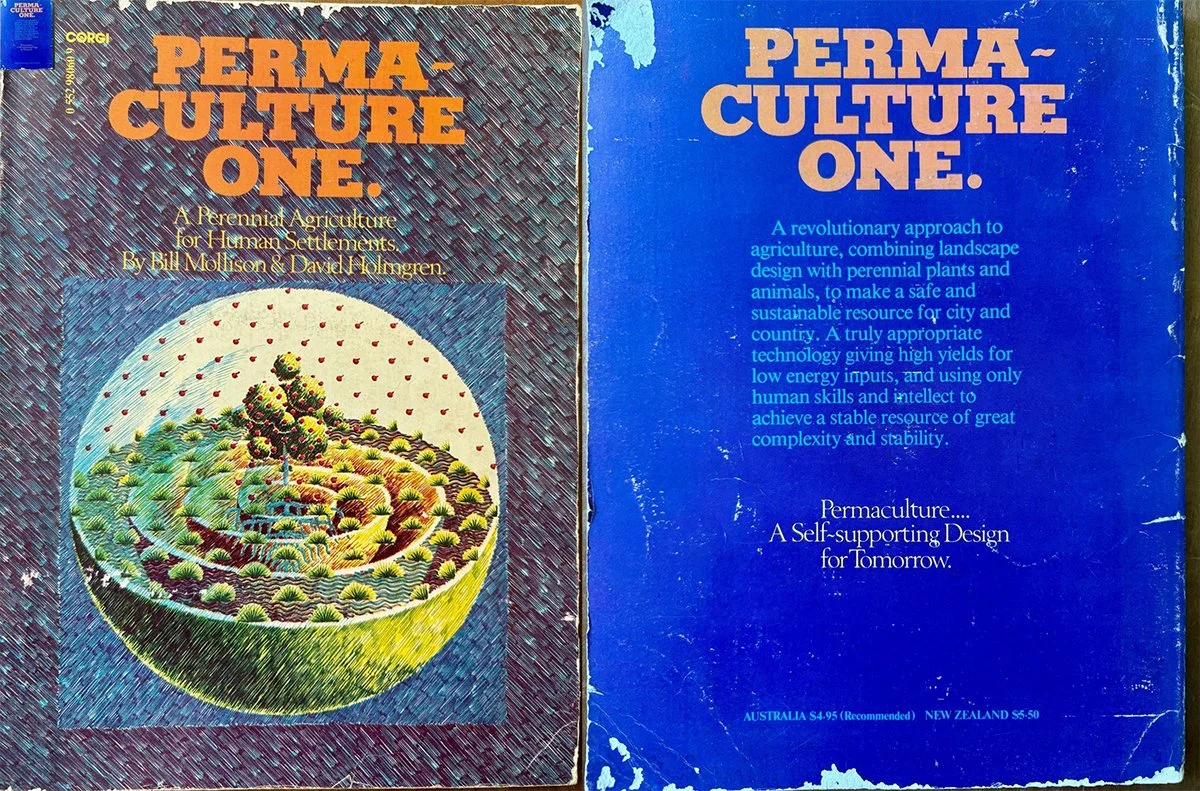
Permaculture One by Bill Mollison & David Holmgren
EGA: After the early success of Permaculture One, you chose a quieter and more private path, focused on practice rather than public profile. Why?
David Holmgren: It was a critical time. There was suddenly huge interest in permaculture, but I was wary of the rockstar dimensions of it. Bill was nearly 50 and ready to take on the world. I was in my early twenties and felt I needed grounded experience, not just ideas.
That led me into years of practical learning. Building, forestry, gardening, farming, woodworking, learning trees, reading landscapes. I wanted competence rooted in direct experience. In hindsight, stepping back from the spotlight was an act of self-preservation and probably wisdom as well.
EGA: You’ve spoken about the importance of New Zealand and your time with Haikai Tane. What did that period give you?
David Holmgren: It deepened my understanding of landscape in profound ways. Haikai had scientific knowledge, but also a more intuitive and esoteric relationship with place. He helped me see that careful observation, quiet attention and time spent in the landscape without agenda could reveal insights no textbook could provide.
That complemented more formal land systems science, which integrates geology, climate, ecology and land use into a coherent understanding of place. Those experiences helped shape the permaculture design process and my own way of reading landscape.
EGA: Early permaculture placed strong emphasis on useful plants. What drew you to that idea?
David Holmgren: We were fascinated by economic botany, the fact that the world contains far more useful plants than modern agriculture typically recognises. We were interested in food plants first and foremost, but also timber, fibre and medicinal species.
There was a practical challenge in seeing what could grow where, especially by using microclimates and diversity rather than monoculture. But there was also a cultural critique in it. Growing useful plants challenged the ornamental lawn and garden as symbols of status and disconnection from sustenance.
Permaculture was saying: reconnect with the sources of life. Grow something useful.
EGA: Do you think permaculture has reached a cultural tipping point?
David Holmgren: I see waves rather than a single tipping point. Interest tends to rise when people lose faith in institutions or when the economy becomes unstable. During boom times, interest often declines. In that sense, permaculture has been countercyclical.
But many of its ideas have spread indirectly. Water harvesting, regenerative agriculture, local food systems, retrofit housing, agroforestry, community resilience. Sometimes the influence is obvious, sometimes it appears under another name. So the ideas continue to move, even when the word permaculture is less visible.
EGA: We’d love to ask about entheogens. How do you see psychoactive plants and substances in relation to permaculture and social change?
David Holmgren: Psychedelics were important in my youth. They challenged what I’d describe as a strongly rationalist mindset and made me more humble about the mysteries of both inner and outer worlds.
One of the ways in which I didn't rebel against my upbringing but added something new outside my parents experience was psychoactive substances – primarily with marijuana, but also in greater depth with LSD, which of course is synthesized.
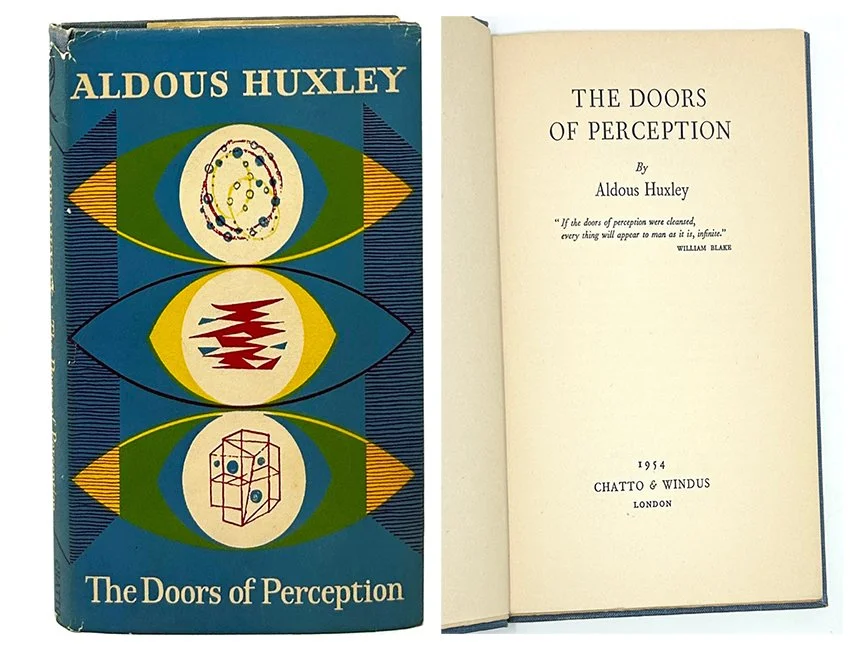
I was very influenced by people like Timothy Leary, his book The Politics of Ecstasy... [Then] Of course I found The Doors of Perception on my parent’s bookshelf. Myself and a small collegiate circle believed that positive mind-changing substances (whether pharmacologically synthesized or natural plant materials) have the potential to raise consciousness, and this was a passion, we took it very seriously.
In my final year of school I was actually the academic Dux, I got very high marks in the final examinations. I also had five LSD trips that year – all managed experiences, within the limits of what 17-year-olds could do – but always in a natural environment, never around people or in unmediated, uncontrolled conditions.
I left that circle of friends and went travelling in ‘73 – I'd come to the conclusion that I’d got to a threshold that I couldn't comprehend, and I thought, I need more life experience. There were dangers there – being confronted with full ego death, the delusion of self… I had a super rationalist mind and
Psychedelics broke me out of that rigidity and made me a lot humbler about what the hell is going on in the inner world, as well as the outer world. But then I set that aside. I found occasional use of marijuana would help me distil fresh insights into things, but that was more a social connection.
I've been watching the revival of interest in entheogens and I know quite a few people who have gone on further journeys of exploration, with Indigenous knowledge and with understanding our connection to nature… A lot of people who I connect with have been influenced by psychedelics.
Watching the renewed interest in these substances, I can see how meaningful they have been for many people, especially in reconnecting with nature, community and forms of knowledge marginalised by modern culture.
I also think this links to ritual. Modern societies often lack meaningful rites of passage and communal processes for transition. Ritual, connection to nature and altered states can all play roles in helping people navigate change and deepen relationship with life.
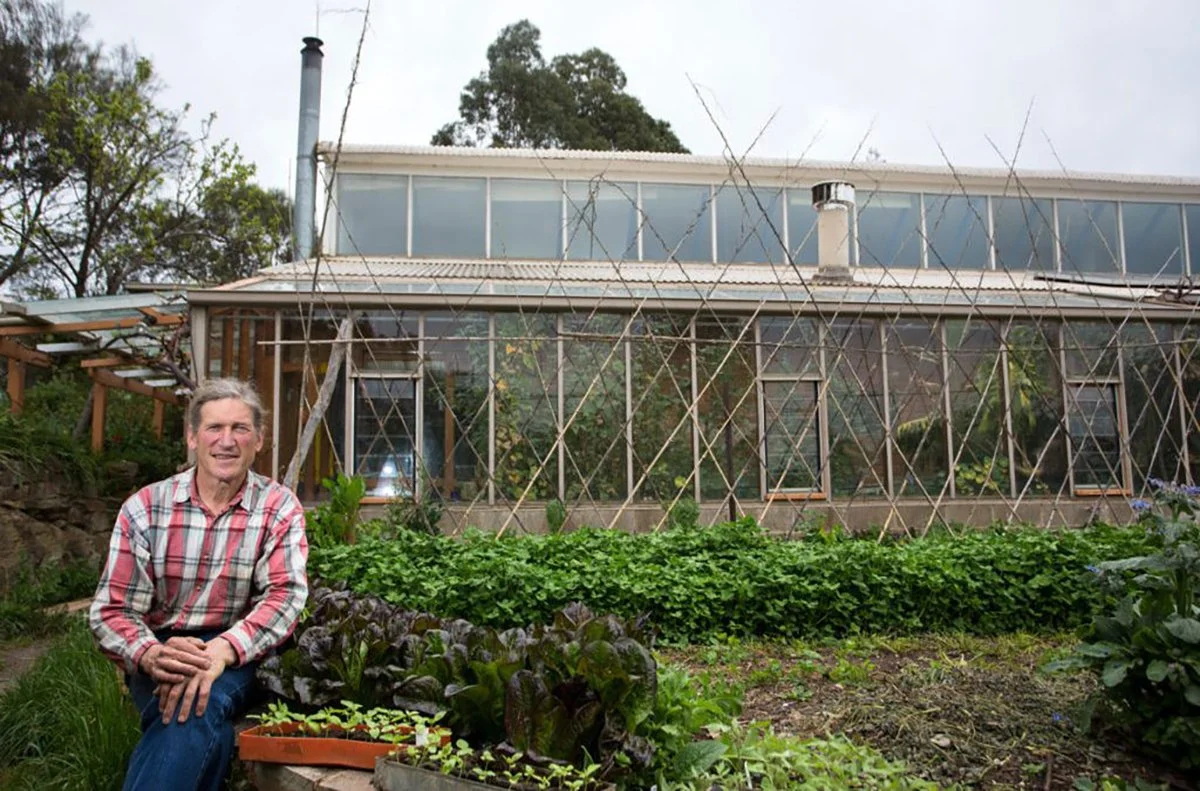
David Holmgren at Melliodora, his home Central Victoria
EGA: There’s also a personal connection between you and EGA through Tim Payne, one of our founders. Do you have any memories of him you’d like to share?
David Holmgren: I was aware of Tim through his connection to Bill Mollison before I really knew him personally. Later we met properly at a gathering where there was this extraordinary sense of shared history and overlapping connections. We spoke for ages. I learned a lot about his journey in a short time.
What stayed with me was his warmth, curiosity and the way he carried connections between different worlds and communities.
EGA: Finally, you’ll be joining us at Garden States. Is there anything you’re particularly looking forward to?
David Holmgren: I’m focused mainly on what I’ll be presenting, which will be a series of short stories exploring the connections between ethnobotanical knowledge and permaculture through personal anecdotes. Beyond that, I’m happy to see what draws me in at the time.
I’m always interested in adjacent fields such as mycology and in people helping democratise practical knowledge. That spirit of sharing skills and empowering people to do things for themselves is deeply aligned with permaculture.
We extend our sincere thanks to the EGA team for making this interview possible, including our editors, Anita Spooner and Walter Juan. Our appreciation also goes to David Holmgren and the Holmgren Design team for their generous support.
You can now watch David Holmgren’s fantastic EGA keynote, “Permaculture Stories: Celebrating Floristic and Fungal Abundance,” on YouTube.