Garden States: Regeneration
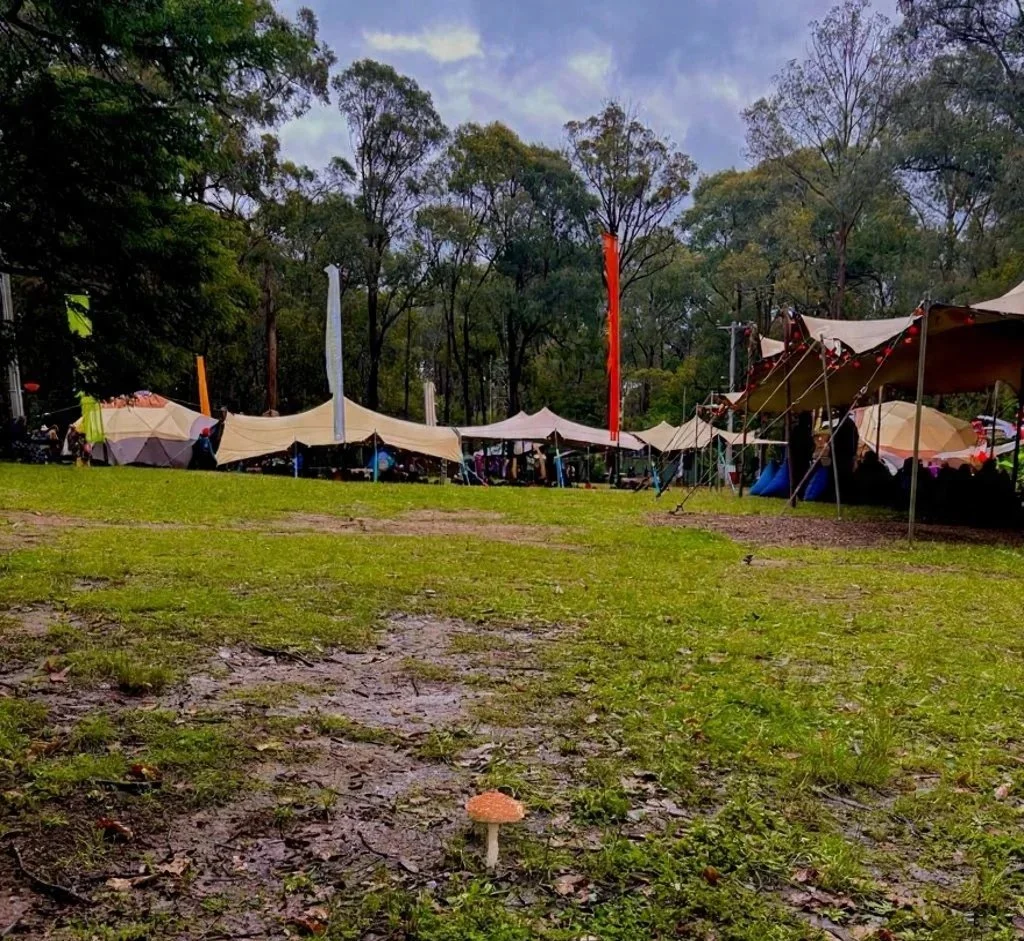
Across four days, EGA brought together a wide range of voices working at the edges of ethnobotany and psychedelic research.
Via presentations, workshops and art, attendees were gifted the most spiritually generous and intellectually stimulating experience in what must be one of the most unique four days anywhere in the world.
These are my notes from a temporary academic and lifestyle village..
📷: Stewart Carter || Luke Brophy || Peter Baxter || Jess Seed || Adele Wilkes || Andy Horley || Also some Images by the EGA film crew.
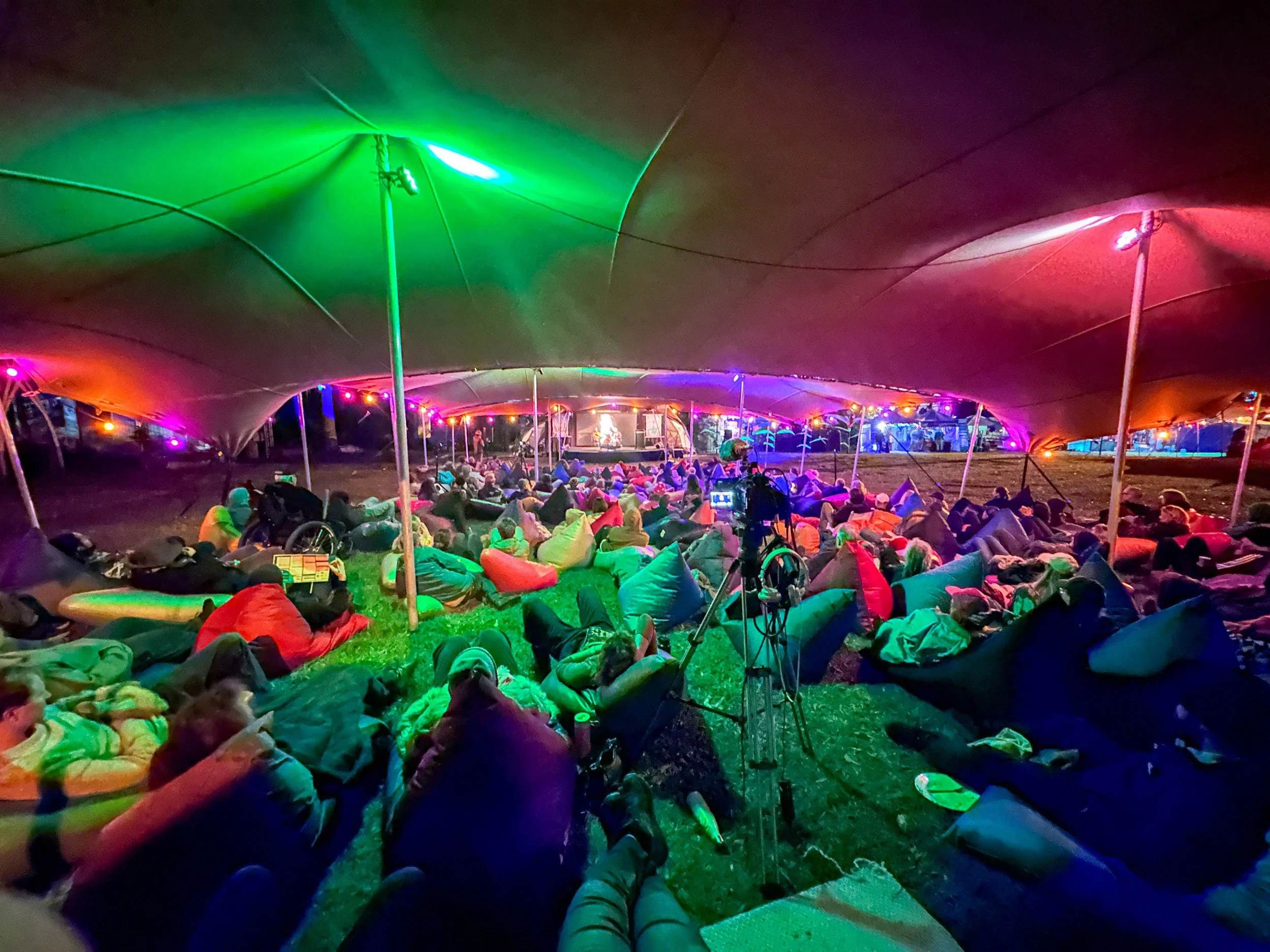
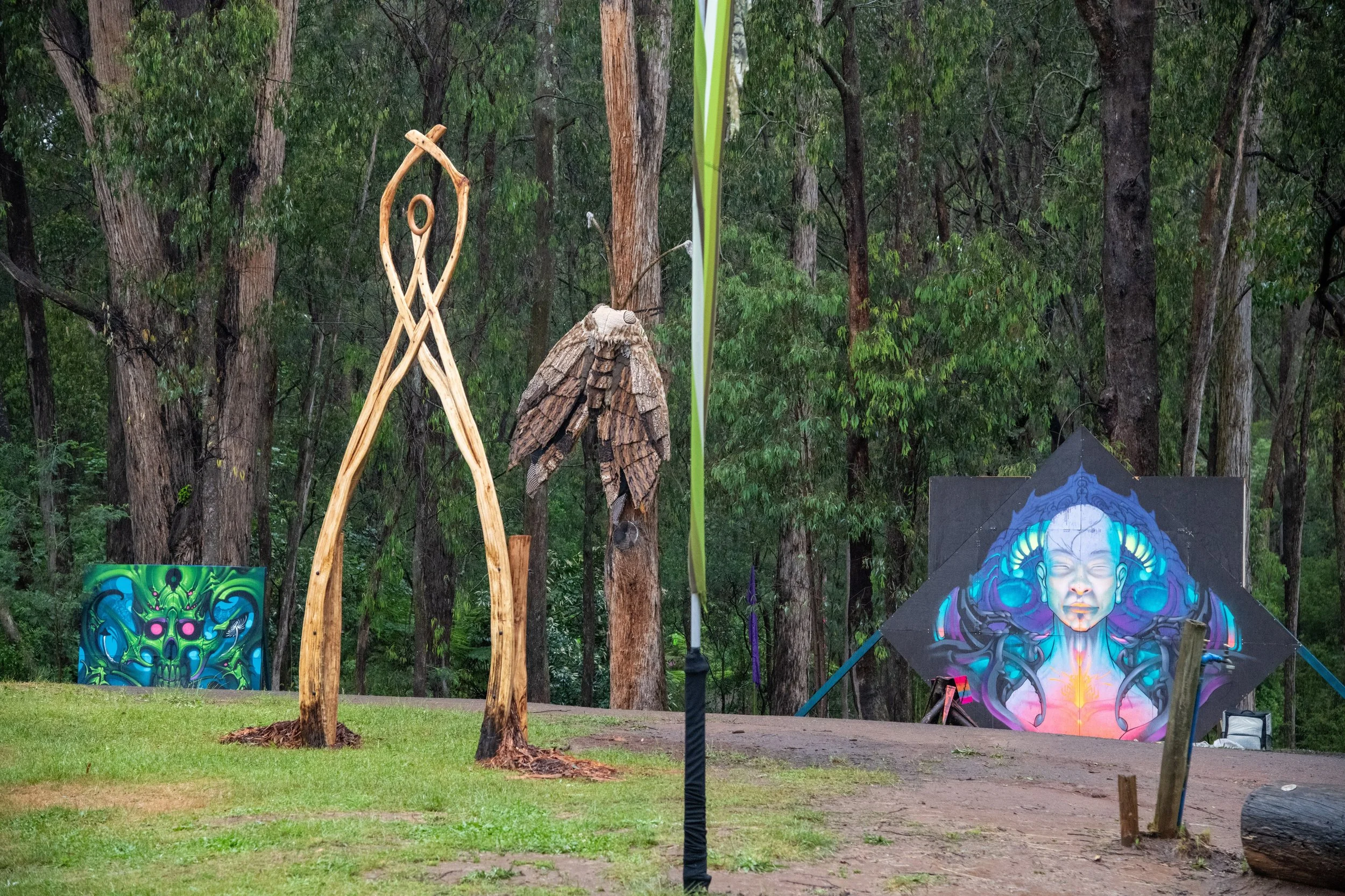
Across four days in the forests of Gembrook, Entheogenesis Australis assembled something closer to a temporary village than a conference. Built as an outdoor gathering, participants camped on site and the stages sat among the bush, with the programme unfolding in rain or sunshine.
It was a place where ideas were not just presented, but lived alongside. Early mornings morphed into long days fuelled by extended conversations.
If you were pushed to explain what EGA is, you might say it focuses on ethnobotany.
That’s accurate, but not the whole picture. At its core, EGA is about epistemology: how knowledge is formed, tested, and passed on, and how easily it fractures without context, culture, or care.
That’s the soil EGA is anchored in.
The long build-up to the Garden States reflected that responsibility. The programme was dense, unapologetically so. More than forty talks and workshops spread across multiple stages, covering ethnobotany, harm reduction, ecology, policy, culture, and art.
Here, plants and fungi are not symbols of nature, but systems of survival. They are the circulatory networks of the planet, moving energy, matter, and information through soil, fungi, climate, and time.
If they hold the conditions that make life possible, they also carry knowledge about how life might be sustained - and sometimes repaired.
They secrete information. We are the bees, responsible for how it spreads.
The harder question follows: how to circulate that knowledge without stripping it of context or care.
Those who gathered to listen were students of life, drawn by immersion, curiosity, and a desire to return to source.
A sidenote: I’ve tried my best to cover as much as possible across an abolsutely packed full four days. What follows is as faithful a recollection of events as I can muster!
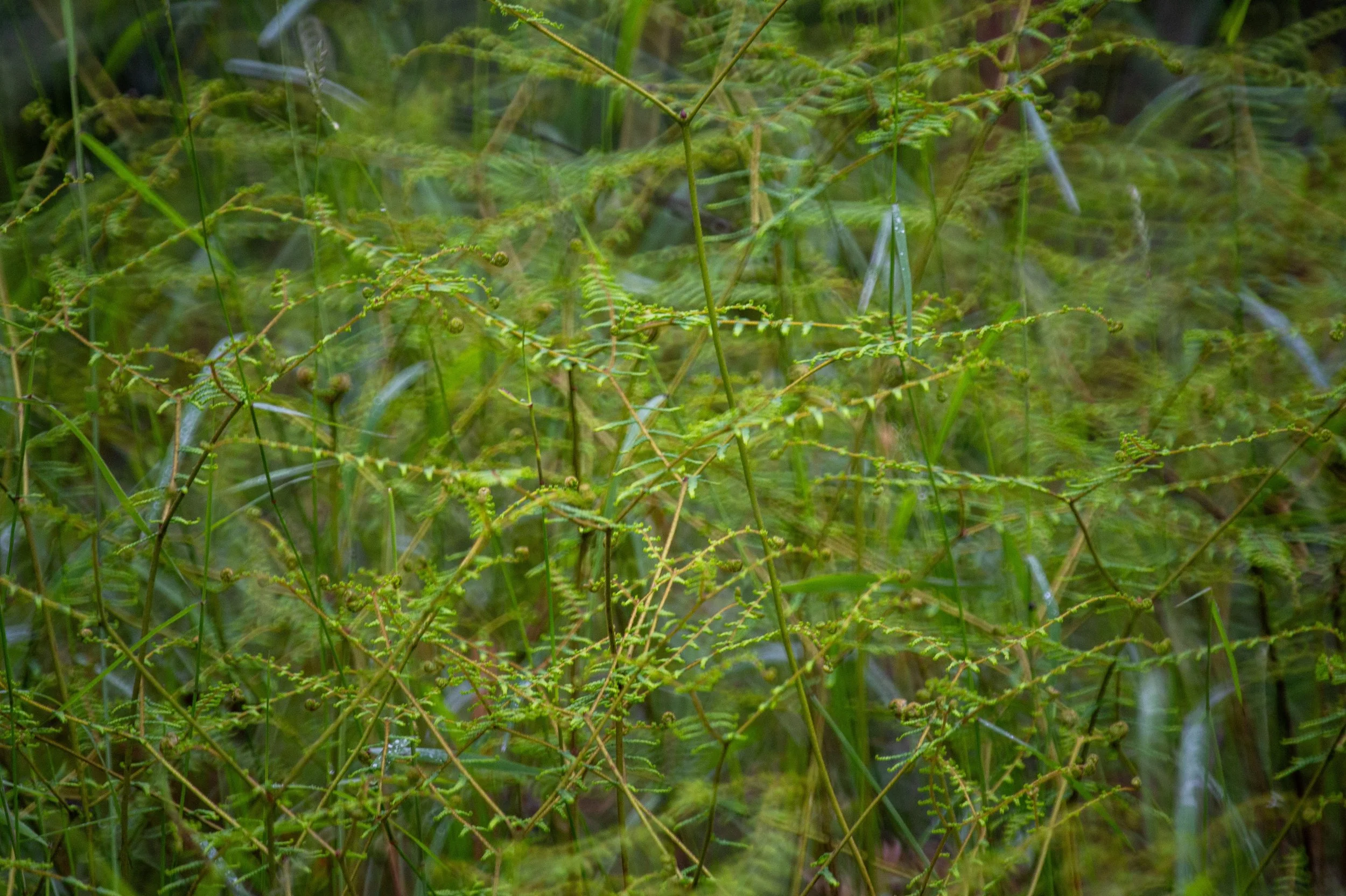
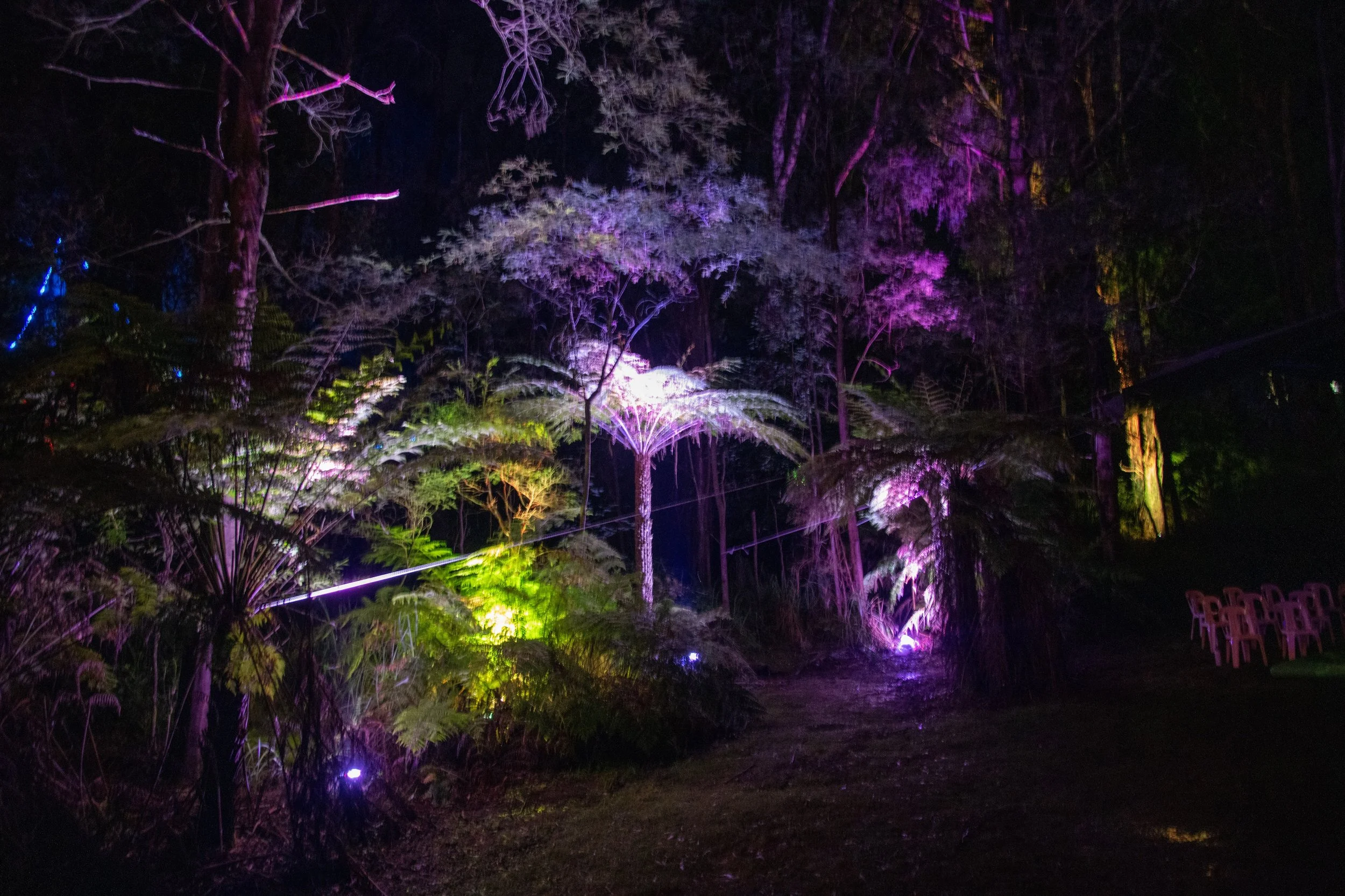
FRIDAY
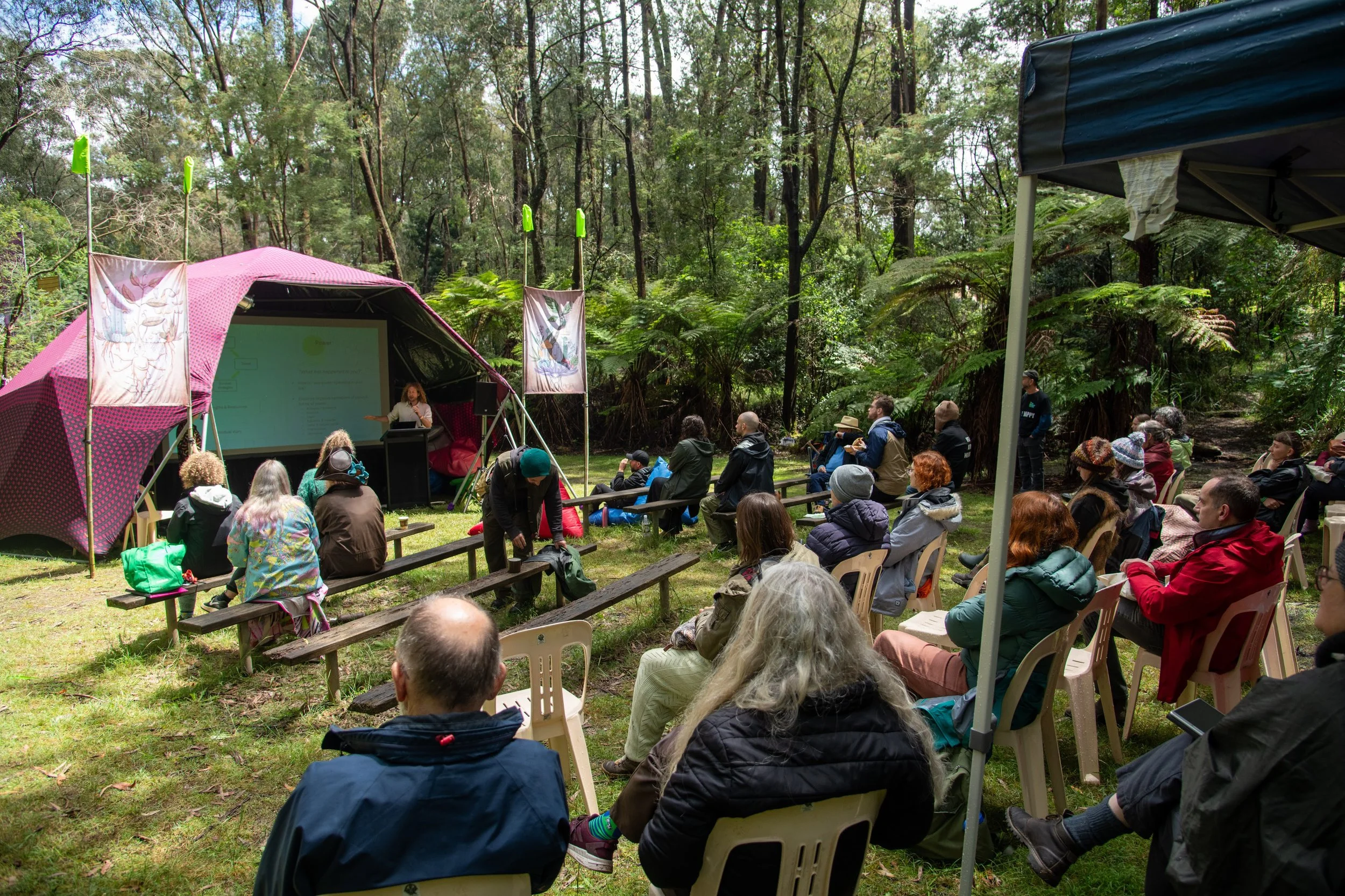
Friday evening settled in quickly. People pitched their tents, wandered through the village, grabbed food from the marketplace, then drifted straight into the programme. There wasn’t much of a gap between arrival and participation. Things were already moving.
Walking between the trees, the site revealed itself more fully: three stages, a shared working space, an art gallery, and two market areas offering food, plants, wearables, rare finds, and collectables. Wherever you went, people were talking, trading plants, swapping stories, and sharing practical knowledge.
Some arrived early and ended up at the Alchemy Stage, which was active before the main stage even opened.
Thomas Forrest led off with a practical discussion on cultivating cannabis ethically, followed by Vince Polito outlining what actually changes in altered states of consciousness.
Caine Barlow and Simon Beck then took on wood-lover paralysis, running through what’s currently known about its symptoms, suspected mechanisms, and ecological context. It all set a clear expectation that the weekend wouldn’t skate over detail
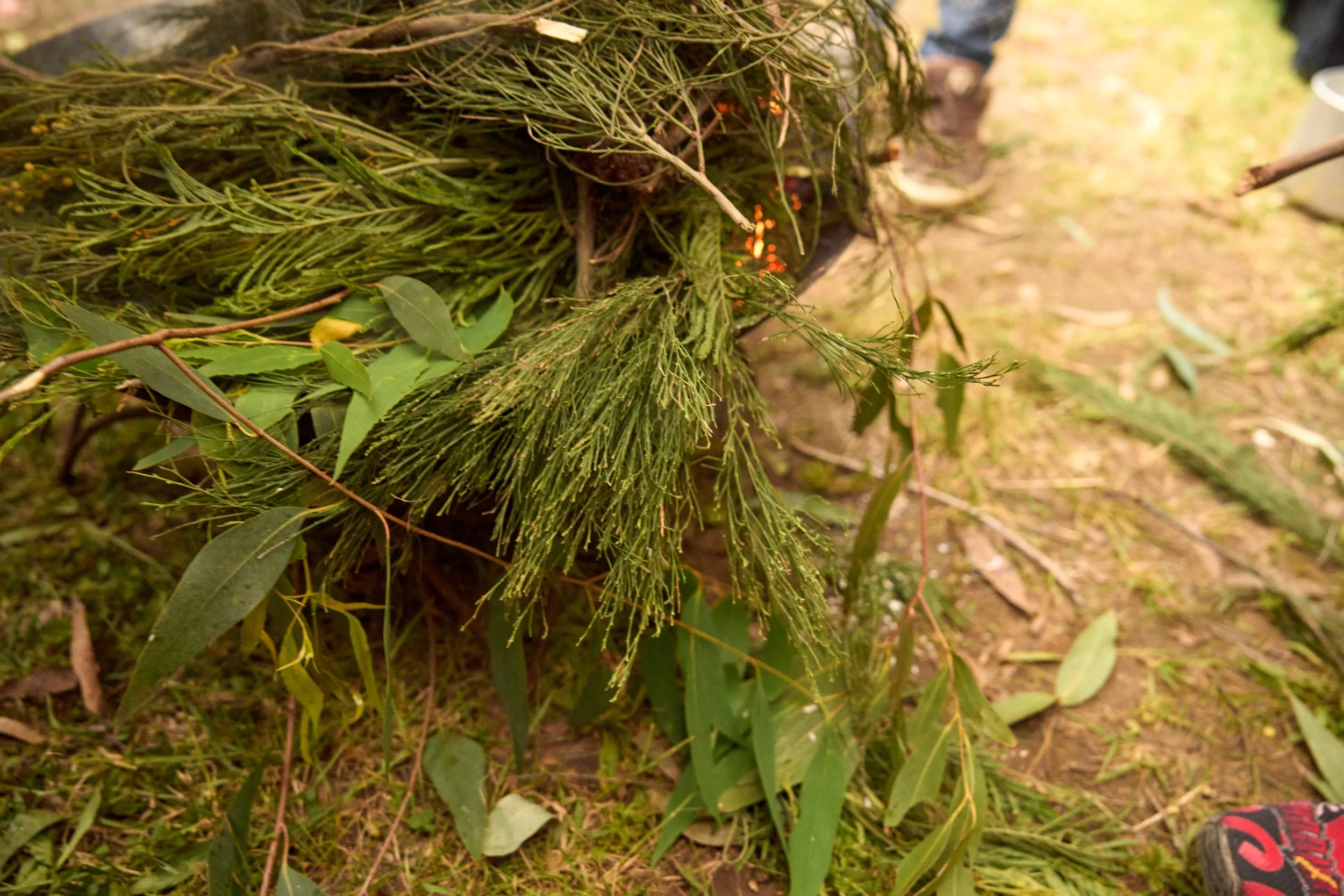
When the Entheo Stage formally opened, that expectation carried across. Uncle Mark Brown’s Welcome to Country placed the gathering in context before any theory entered the room.
Co-founder Martin Williams followed with an introduction that outlined the weekend ahead, not as a set of conclusions, but as something that would unfold slowly and require attention.
That broader frame was picked up by Mark Pesce’s pre-recorded And Now For Something Completely Human.
Rather than leaning into futurism or collapse narratives, the talk stayed with questions of agency, meaning, and what remains distinctly human within accelerating technological systems.
It kept things wide, giving space for the more specific discussions that followed.
From there, the focus tightened. Anna Ermakova’s Psychedelic Fish: A Review of Ethnobiological, Toxicological, and Cultural Perspectives examined documented cases of psychoactive fish, showing how altered states can emerge through ecological food chains when psychoactive compounds bioaccumulate from algae and invertebrates into certain species.
Yes, this weekend is shaping up to be unforgettable.
Neil Logan brought things back to plants. Cojoba. Yopo. Wilca. Cebil. Names that carry long histories and resist simplification.
C. Scott Taylor’s Altered Spaces followed, tracing the sixties as a breeding ground for counterculture and looking at psychedelic light shows as technologies of perception.
It was surprising to learn that this was the first time Taylor had publicly shared many of his stories involving chance encounters with an array of iconoclasts.
I leaned over to the person next to me and said, “He’s like a sixties Forrest Gump.”
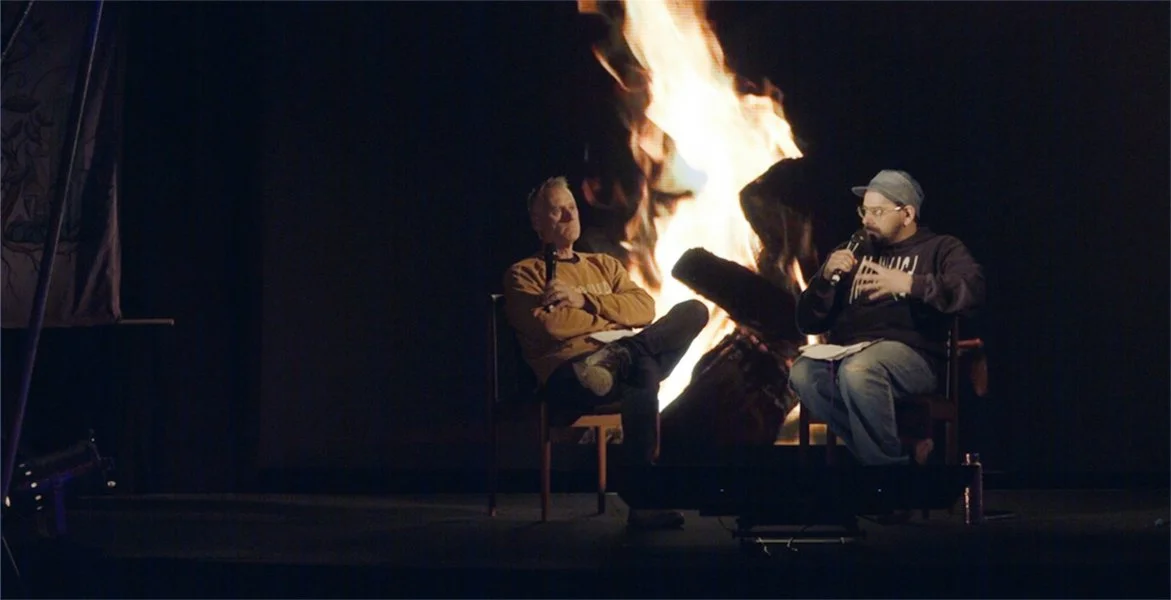
Martin Williams & Rich Haridy
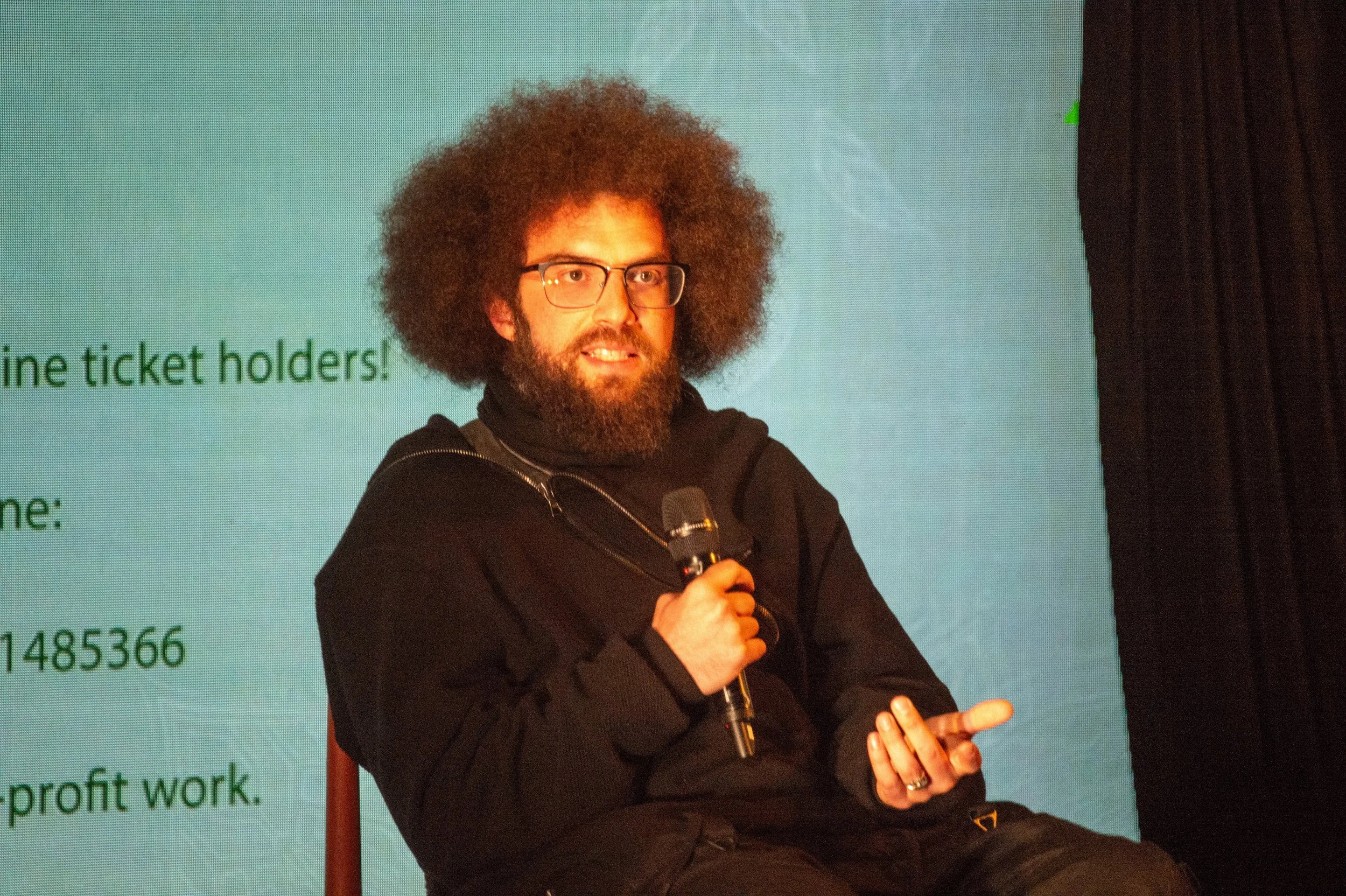
Later in the evening, the format relaxed. A fireside chat between Martin Williams and Rich Haridy shifted the focus toward lived experience, moving between personal stories, cultural memory, and the kinds of insights that don’t always sit comfortably inside formal research.
Prash and Agnieszka closed the night with a practical discussion on improving access to psychedelic treatments.
By the time the first day wrapped up, it was clear what kind of weekend this was going to be. Friday set the pace, laid out the ground rules, and made it clear that what followed would reward attention rather than speed.
SATURDAY
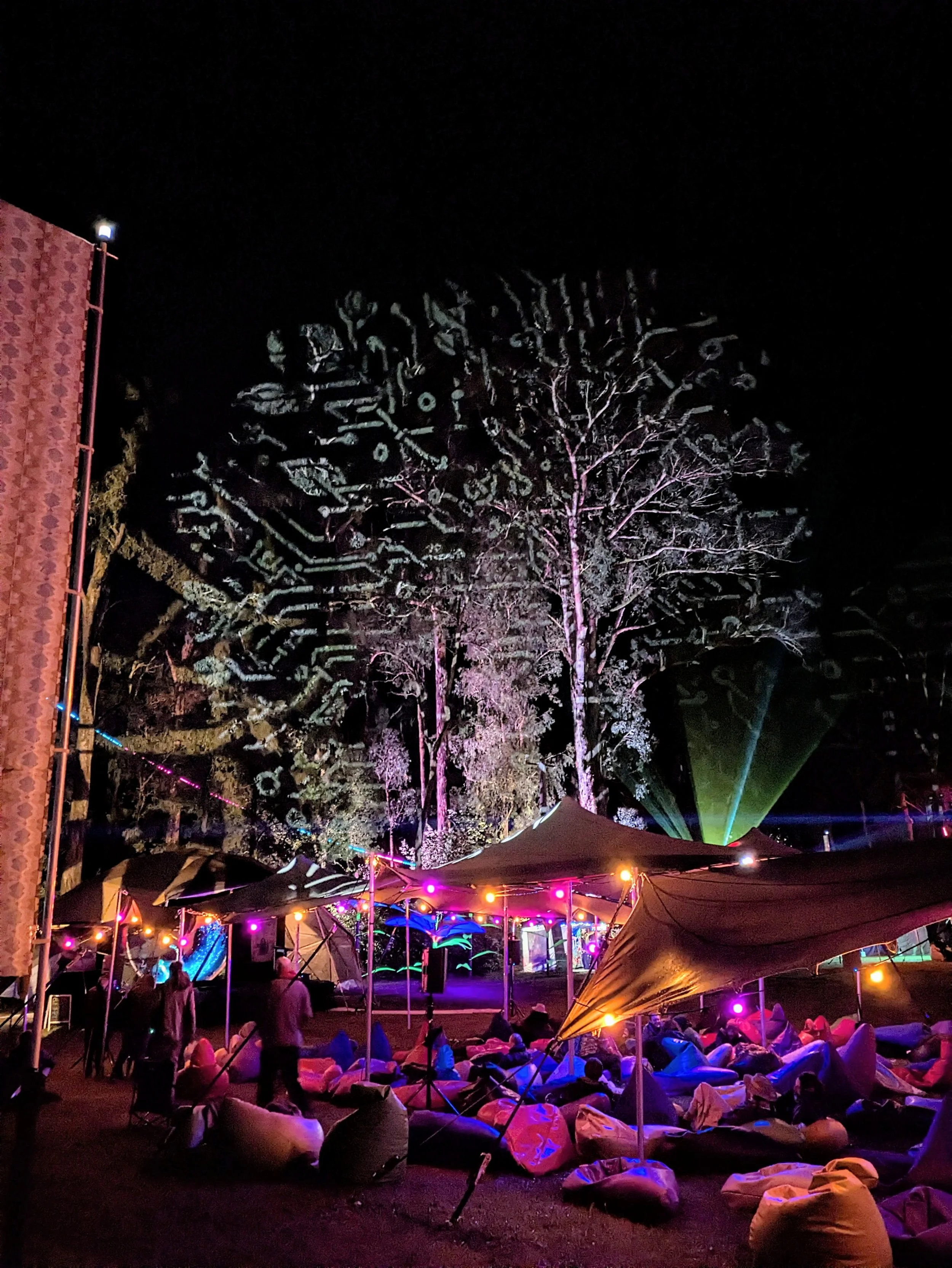
Saturday arrived early and stayed long. The programme began before most people were fully awake, with yoga and somatic sessions easing bodies into what would become the most packed day of the weekend.
By mid-morning, the pace picked up. As the first speaker prepared to start, a woman beside me opened her notebook, pen already in hand, smiling as if she’d been waiting for this moment all her life.
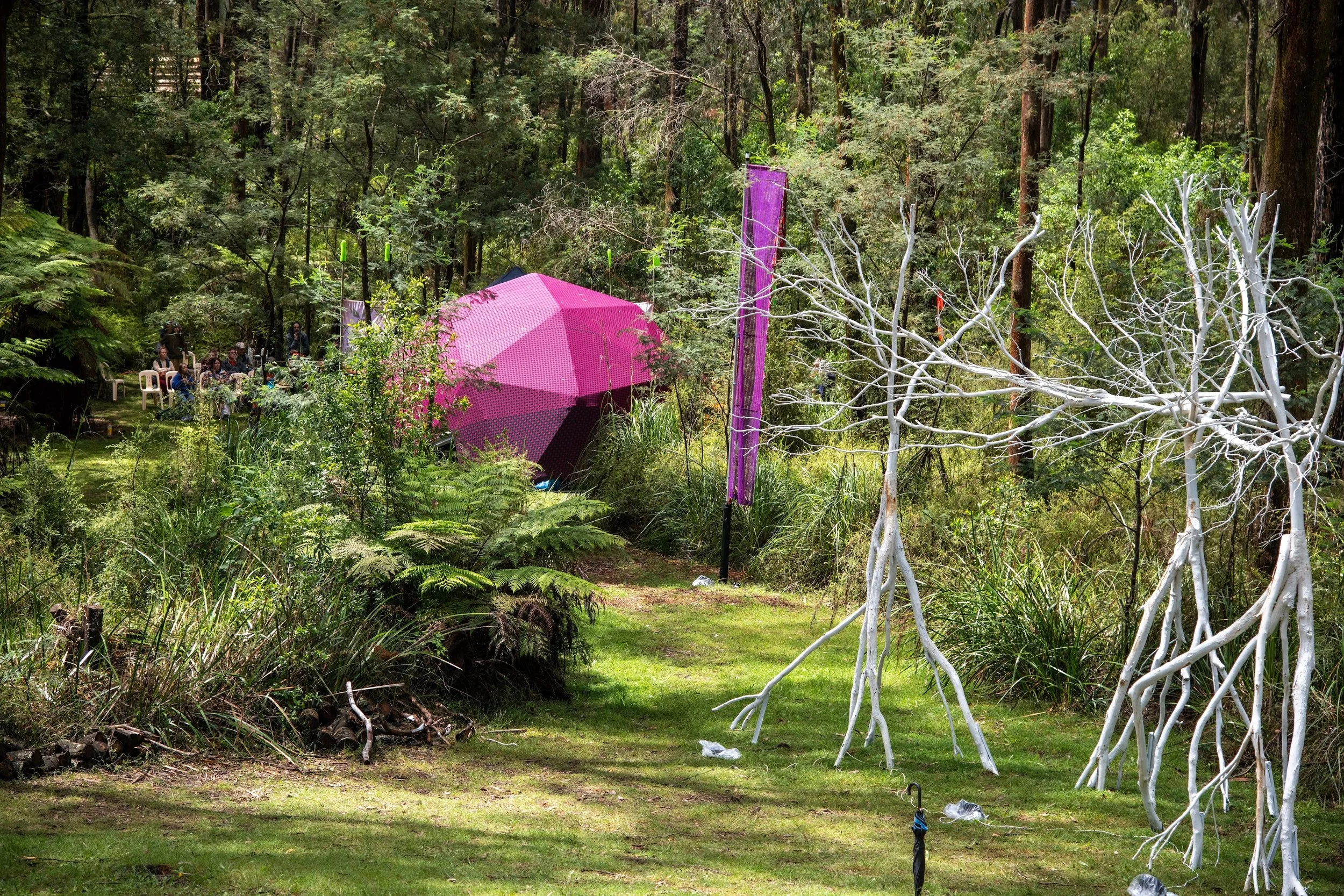
Harry Pack’s Purple UFO was a delightful entry to the day. His cosmic visual language carries a playful surface, but the ideas underneath are precise and philosophical. Art, he suggested, can sometimes do work that language struggles to finish.
The tone shifted again with a panel featuring Rachel Payne MP, David Ettershank MP, and Michael Balderstone, who traced Australia’s uneven relationship with cannabis reform.
Progress emerged as something negotiated: often delayed and shaped by compromise. It became clear that legislation is only one layer of a much older and more complicated story.
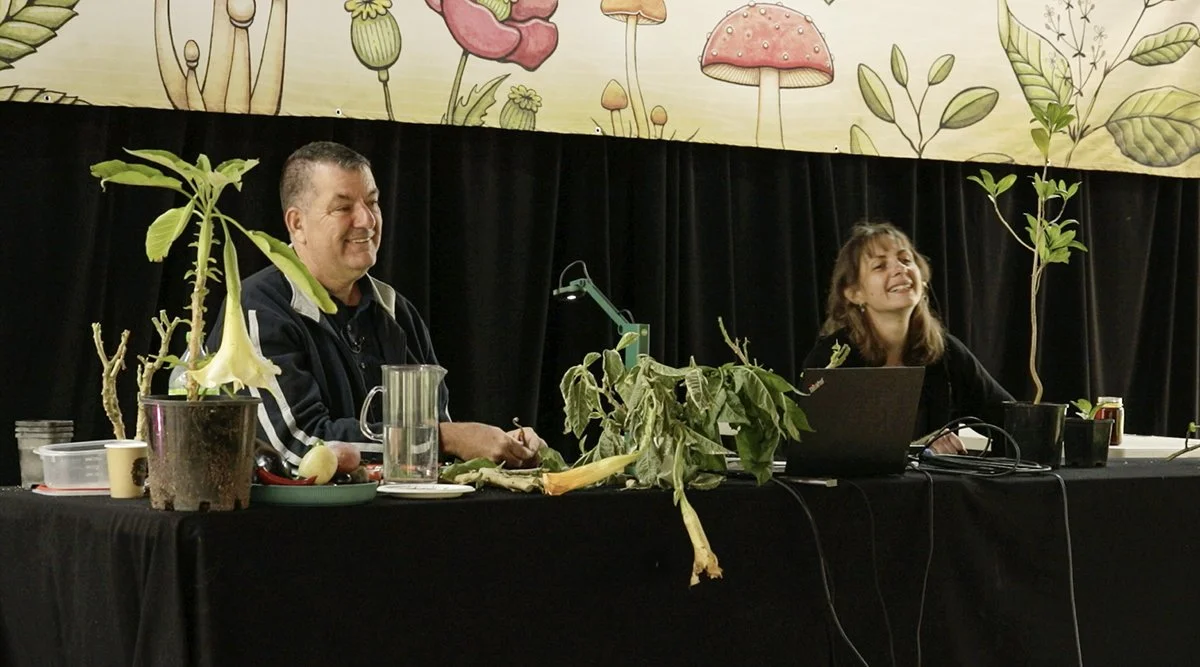
The Seeding Stage
Jeremy J, Torsten Weidemann, and Adam J. Carroll followed with a detailed look at the botanical roots of MDMA, reminding the room that even our most laboratory-associated substances are not disconnected from plant lineages.
Petra Skeffington and Stephen Bright widened the frame further, mapping the space between clinical psychedelic-assisted psychotherapy and community-led practice. Rather than a clean divide, the relationship between those worlds remained unsettled.
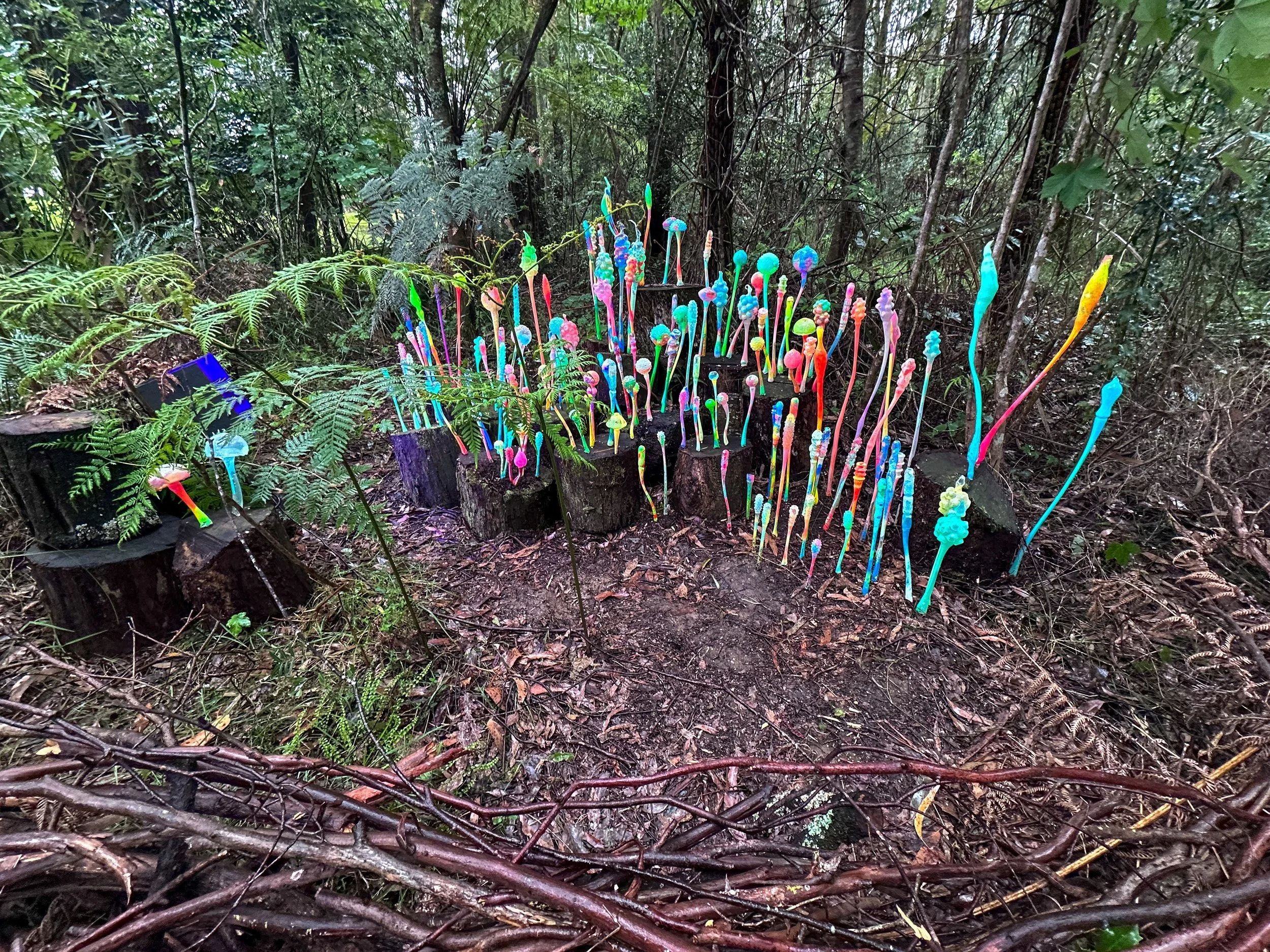
After lunch, the focus turned more explicitly toward ecology and stewardship. Snu Voogelbreinder surveyed psychoactive plants of the Middle East with characteristic breadth and restraint.
Anna Ermakova returned for a talk on peyote conservation. Cutting through the cultural romanticism surrounding the plant, her point was simple enough: interest without responsibility quickly becomes extraction.
Later in the afternoon, C. Scott Taylor returned with How Psychedelic Yoga Led Me to Dolphins, a title so magnificent that his presentation, filled with science and spirituality, surprised with its reflective gloss.
After receiving what can only be described a hero’s welcome, it was clear that Alison Pouliot’s highly anticipated talk. Recalibrating Fungi focussed on the necessary work of placing mushrooms back into ecosystems rather than metaphor.
That included a reconsideration of the popular “wood wide web” mycelium theory that’s circulated in recent years.
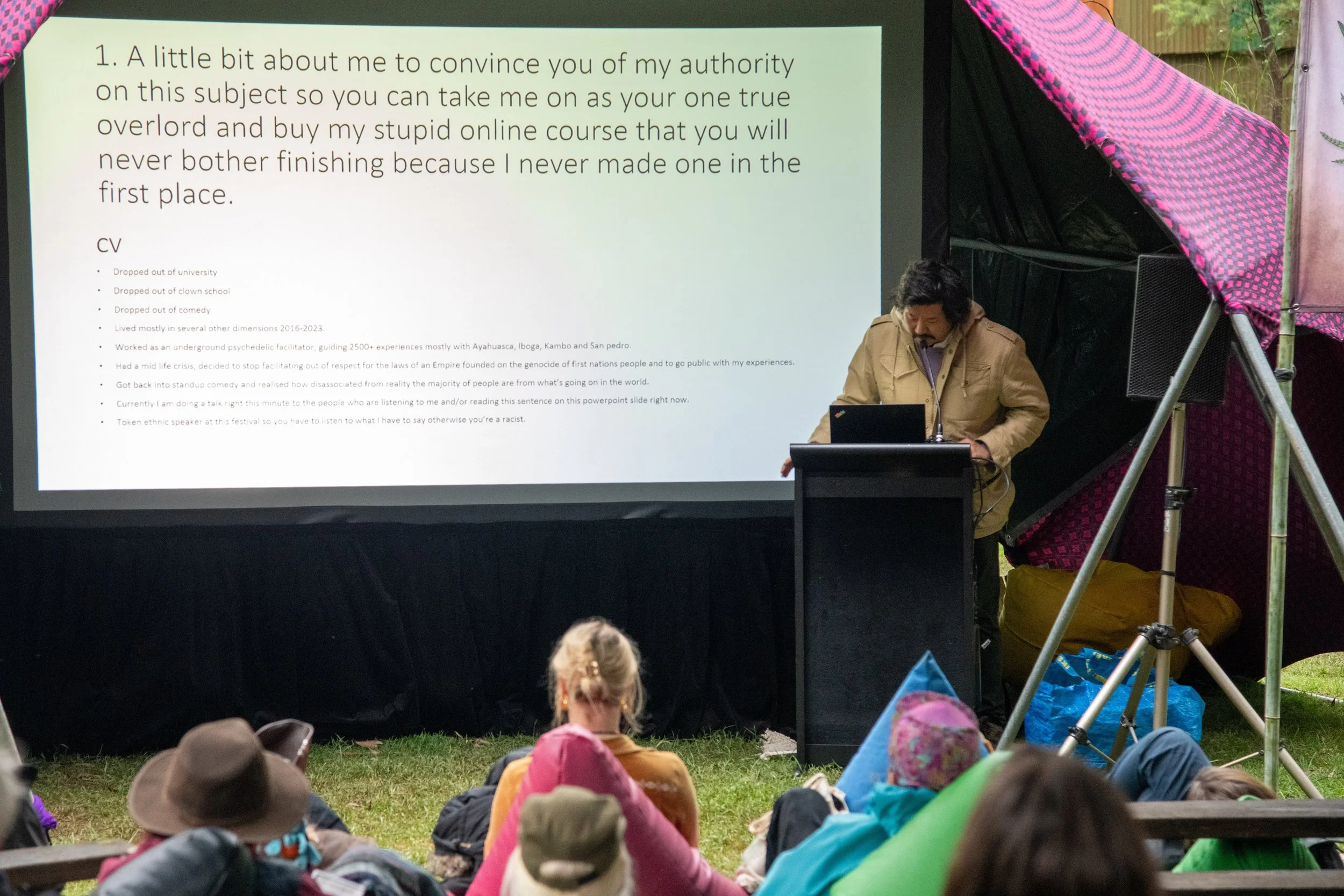
David Nickles closed the daylight sessions with a more confrontational presentation, challenging assumptions and unexamined norms.
He highlighted how capitalism cloaked in empathy and spirituality might obscure unscrupulous, or unethical, behaviour. It sparked plenty of discussion; not all of it comfortable.
As evening approached, Neil Logan returned with The Yagé Complex, tracing the tangled taxonomy and cultural histories of ayahuasca vines.
Mike Jay’s The Art of Mescaline expanded the conversation again, treating mescaline as both chemical substance and cultural artefact.
Graham St John closed the Entheo Stage with Terence McKenna’s Australian Adventure, reframing McKenna less as oracle and more as a figure moving through contradiction, context, and influence.
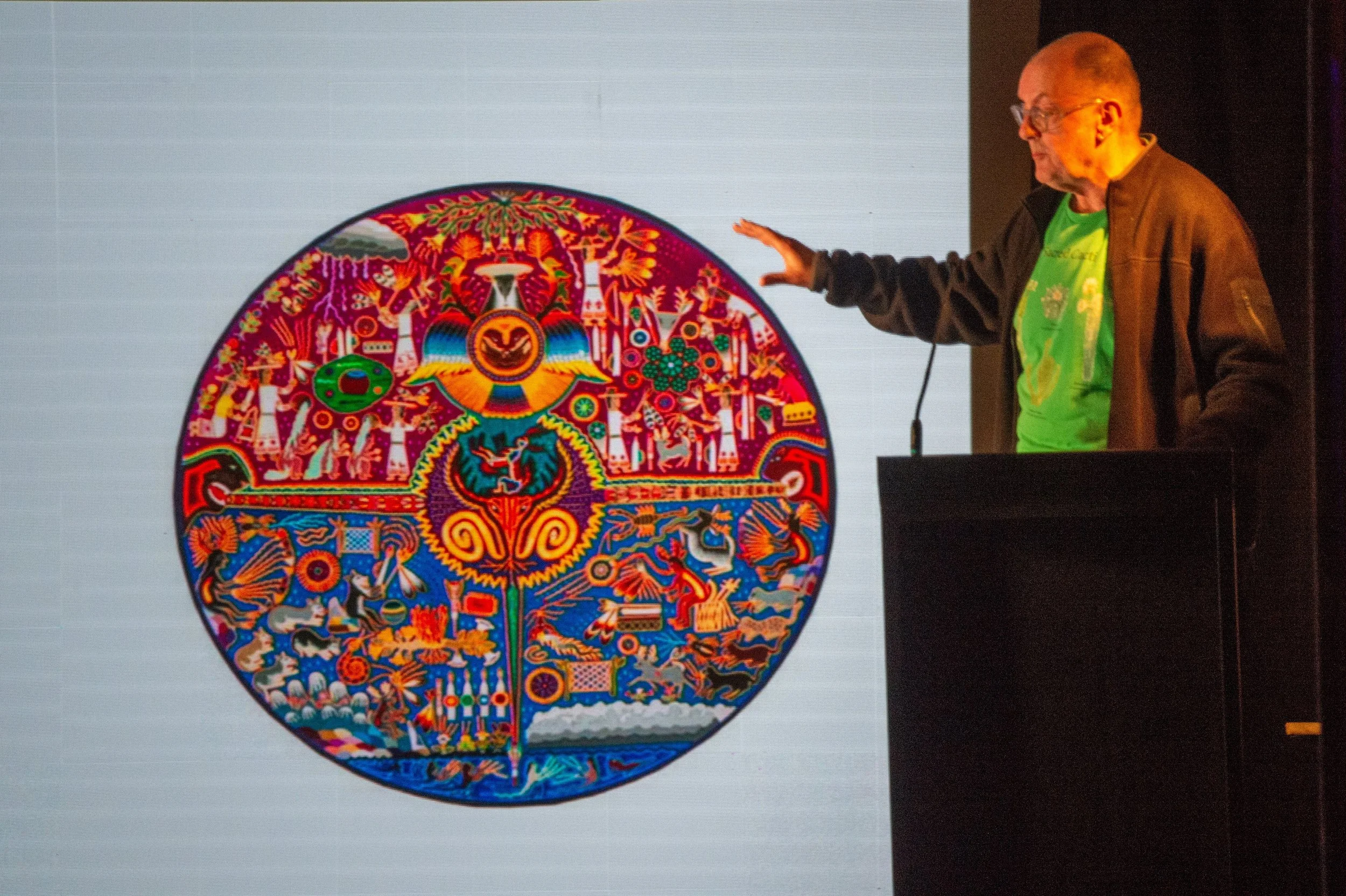
Mike Jay
Elsewhere, Saturday unfolded along different lines. The Alchemy Stage leaned into deeper dives on consciousness studies, cactus chemistry, and what Nick Sun later described as psychedelics within the polycrisis.
Seeding Grounds focused on propagation, harm reduction, and collective futures. The Messmate Annexe hosted nature walks, hands-on workshops, and creative sessions, ensuring the day was never only about sitting and listening.
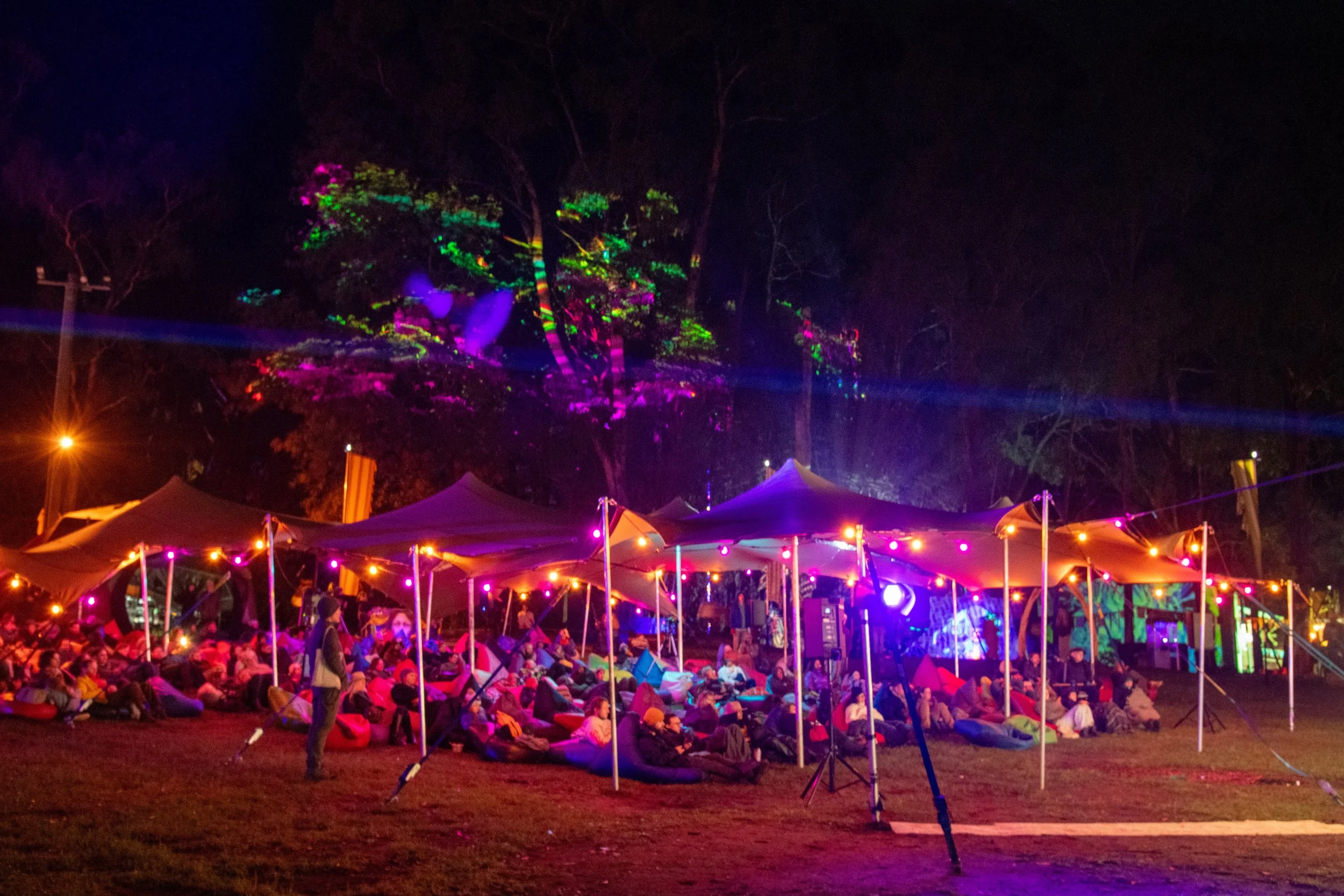
By night, the tone shifted again. Music began drifting out from the Night Owls building, its gingerbread-style entrance leading into a dim space of visuals and dance. DJs took turns soundtracking the evening as conversations gave way to movement. The landscape lit up, artworks appearing through the trees, and a distinctly luminous aesthetic settled over the site that reminded of certain dimensional spaces.
SUNDAY
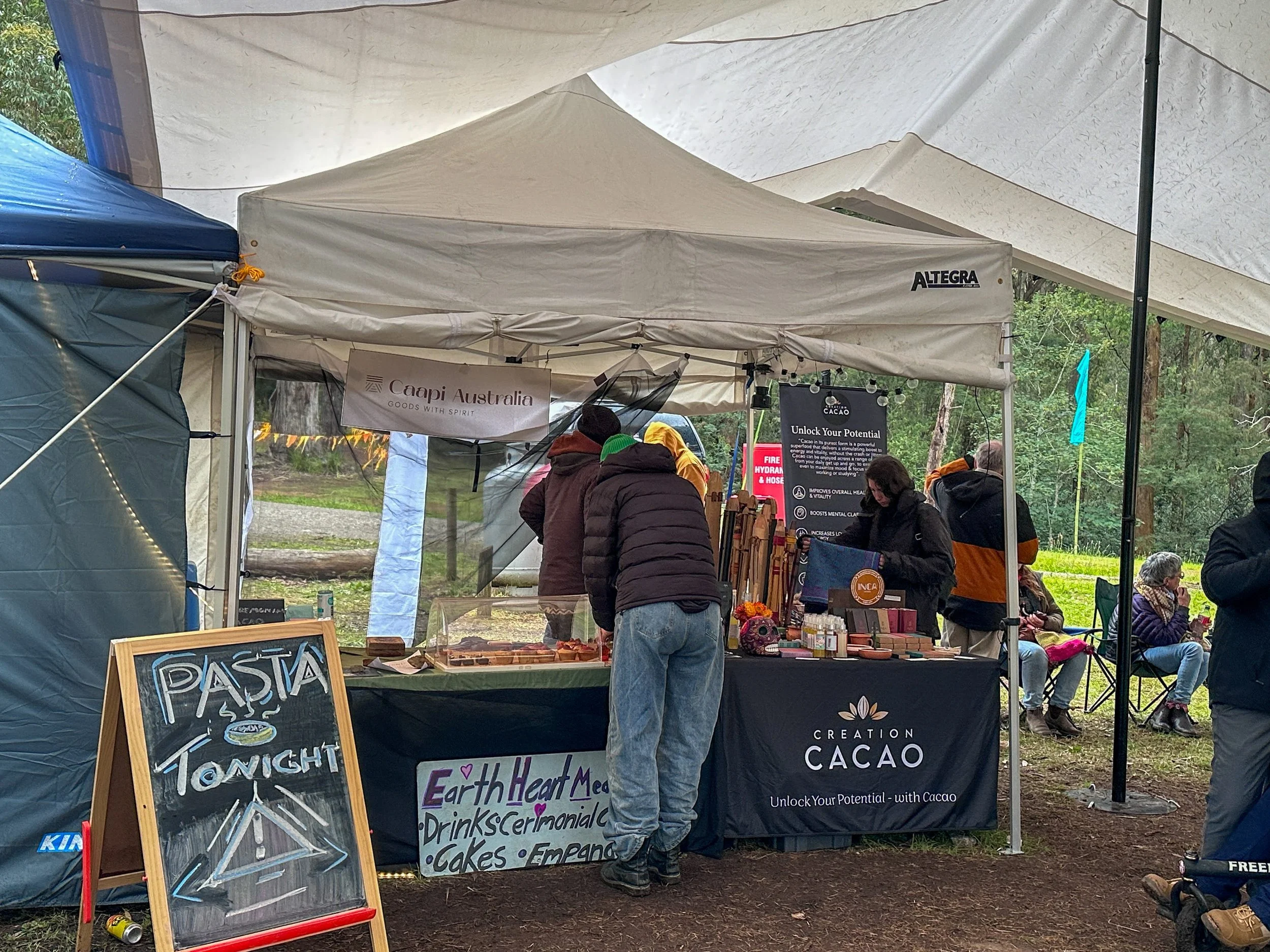
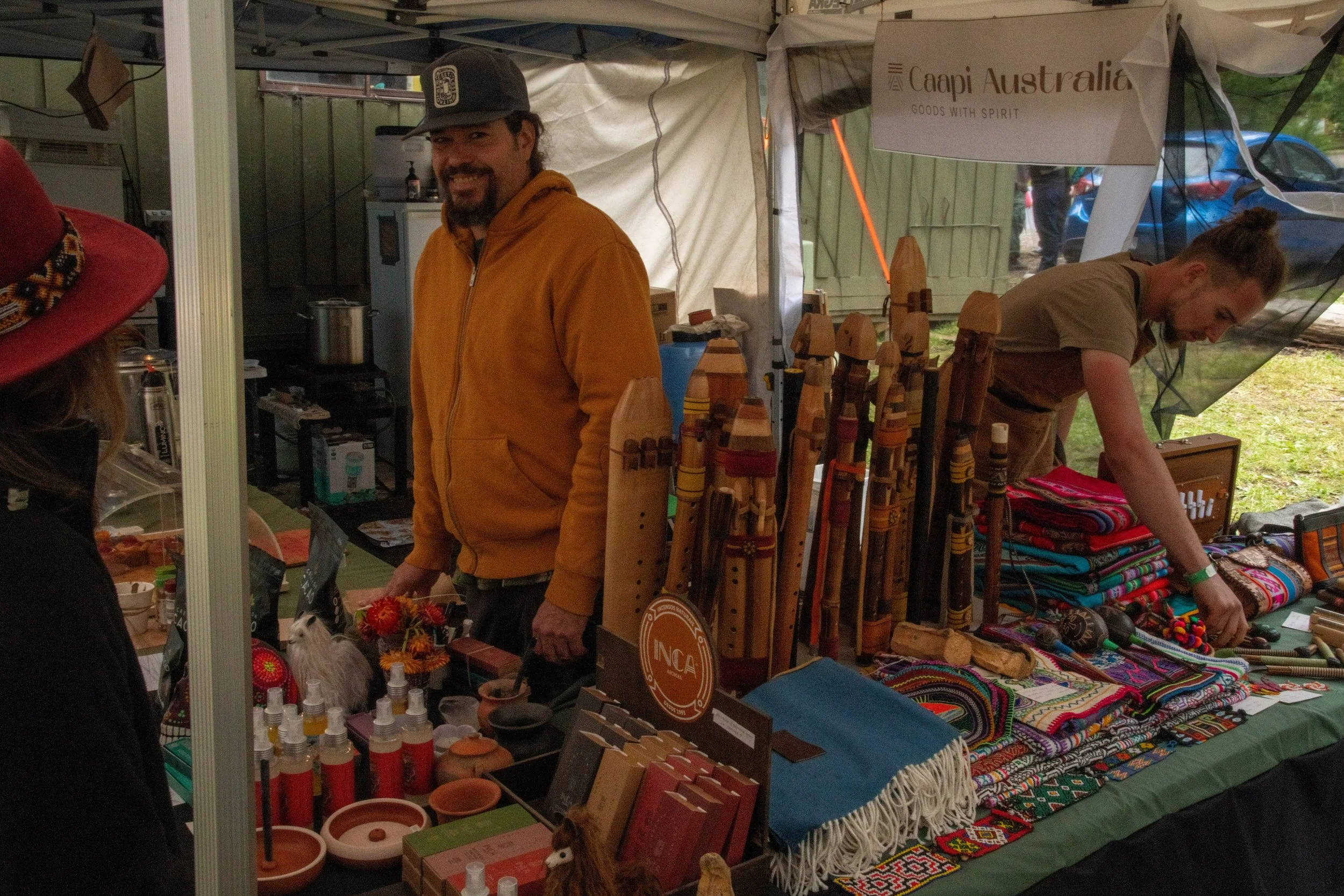
Sunday started slowly, with a hot cocoa from the Heart of the Earth Cacao Collective (photos above). Served by an easygoing crew, it wasn’t hard to see why the cocoa tent had become a meeting point over the weekend. Undercover, comfortable, set up in a majlis-style arrangement with low seating, it was a good place to sit, catch up, and ease into the day.
The programme echoed the pace from Saturday, the morning opening with yoga. The didactic shift came once First Nations speaker Anna-Leigh Hodge took the stage. Her presentation, Tū Wairua, framed psilocybin within a Rongoā Māori context, where healing is understood as relational rather than interventionist. Knowledge here was inseparable from ancestry, land, and obligation.
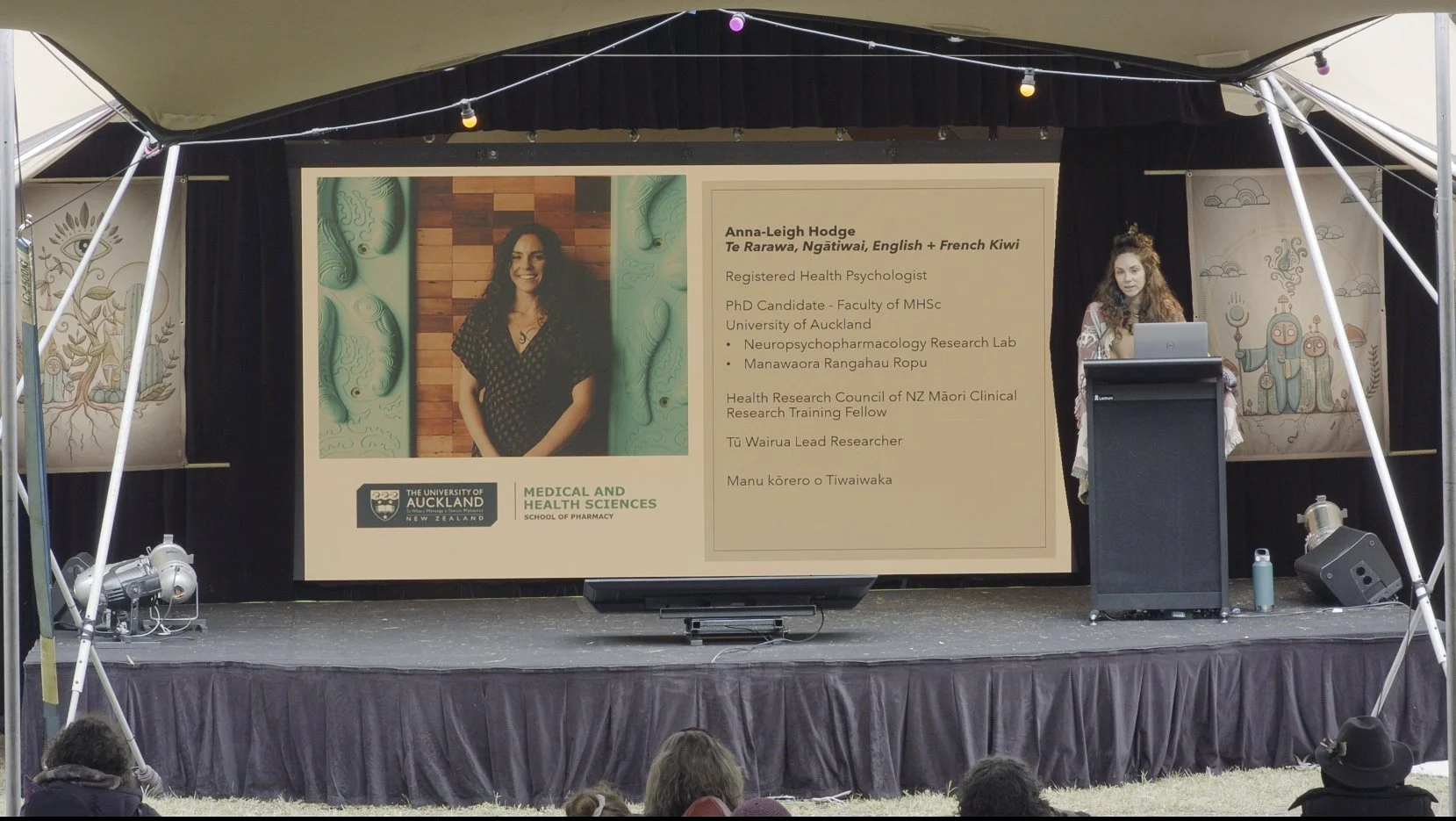
Anna-Leigh Hodge
Tehseen Noorani followed, reflecting on community organising around psychedelic therapy in Aotearoa. The focus moved away from individual experience toward collective infrastructure, with questions of access, governance, and accountability coming into sharper focus.
By late morning, the conversation had turned more explicitly toward Indigenous-led futures. Kirt Mallie spoke about Indigenous Psychedelic Assisted Therapies, reframing healing as something that cannot simply be folded into existing systems without consequence. Alex K. Gearin’s Ayahuasca and Time Travel approached altered states through temporality rather than transcendence, while Martin Williams closed the morning by mapping current legal models of psilocybin access around the world. What emerged was a picture that felt provisional and uneven, shaped by jurisdiction, politics, and history.
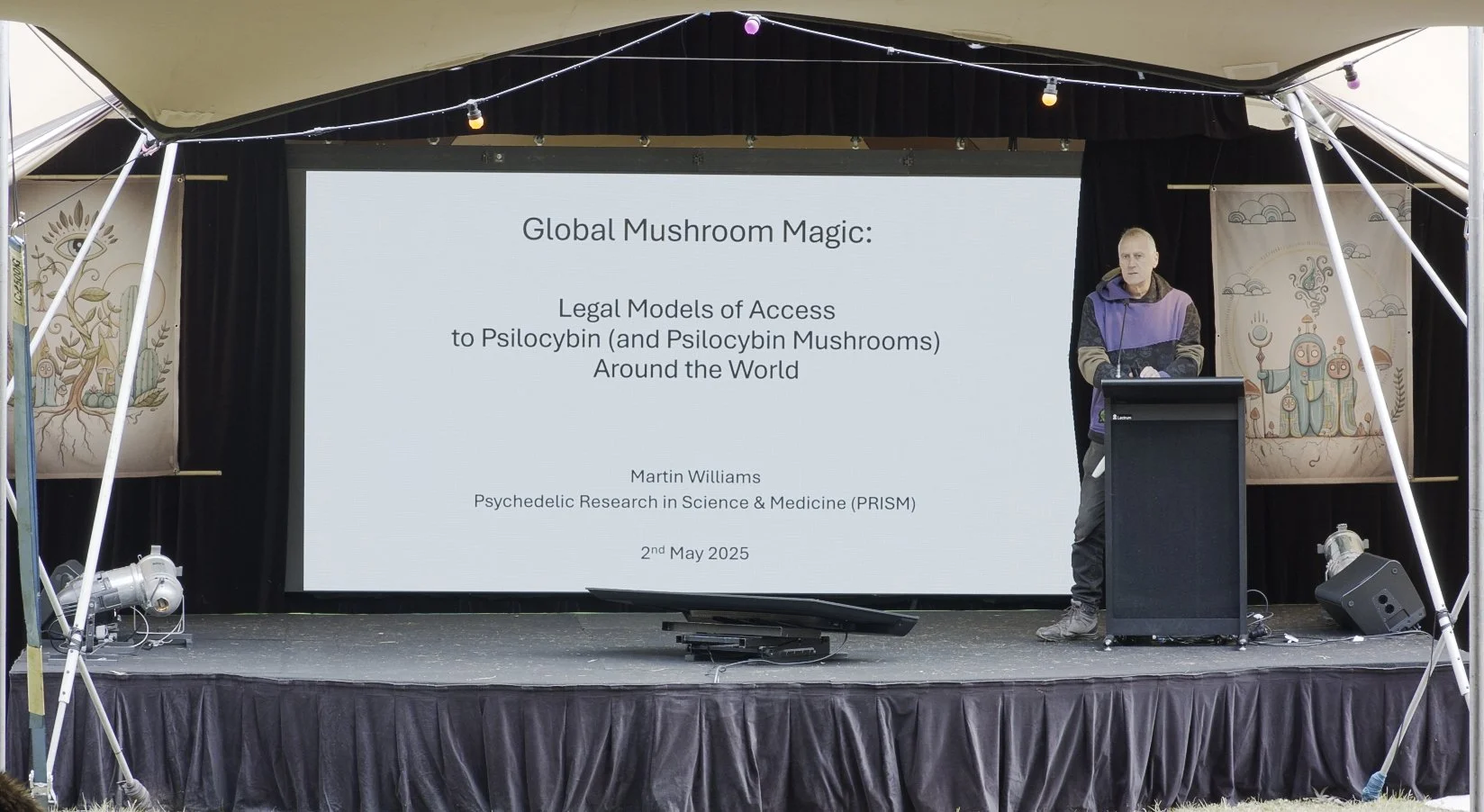
Martin Williams
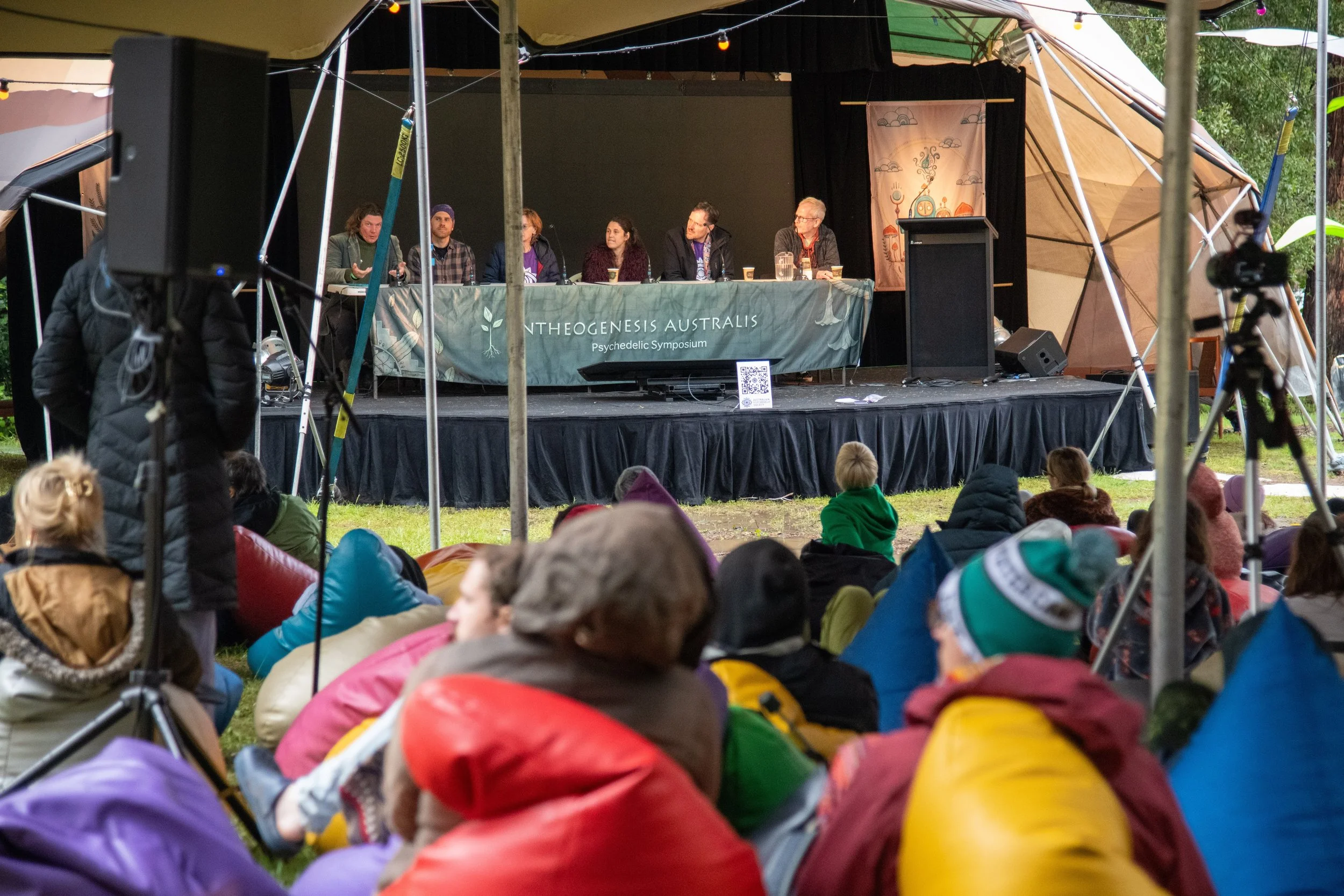
First panel discussion of the day
The afternoon was given over to panels. Contemporary challenges facing Australian psychedelic users. The future of ethnobotany. Drug checking in Australia and New Zealand. These sessions resisted tidy conclusions.
Instead, they surfaced familiar tensions: regulation and access, protection and extraction, care and commodification. No one pretended these questions could be resolved in an afternoon, but naming them felt necessary.
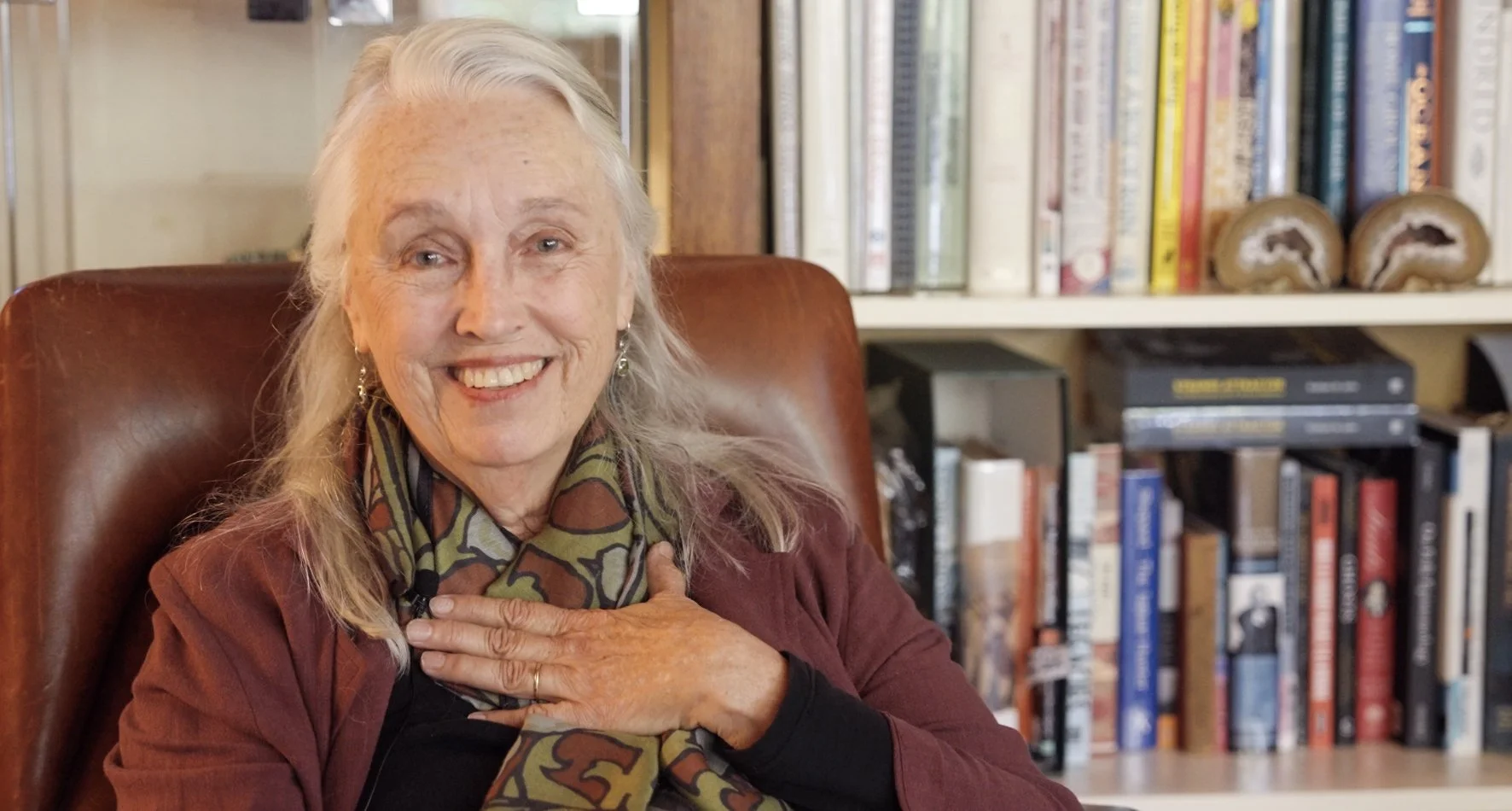
Kathleen Harrison
As evening approached, the programme widened again. Kathleen Harrison (the widower of the late Terence McKenna) delivered what felt like an epic download, tracing humanity’s relationship with psychoactive plants, not as a breakthrough narrative but as a long, recursive entanglement. The Long, Winding Road of Psychedelic Species and the Human Quest drew on decades of lived engagement and historical depth.
Mike Jay followed with a deeper look at mescaline’s cultural life, tracing its shifting meanings across medicine, mysticism, and counterculture.
Graham St John then took the stage as part of his current book tour. Our Man in Nirvana tracked the life of Terence McKenna, positioning him less as prophet and more as itinerant thinker and cultural influencer.
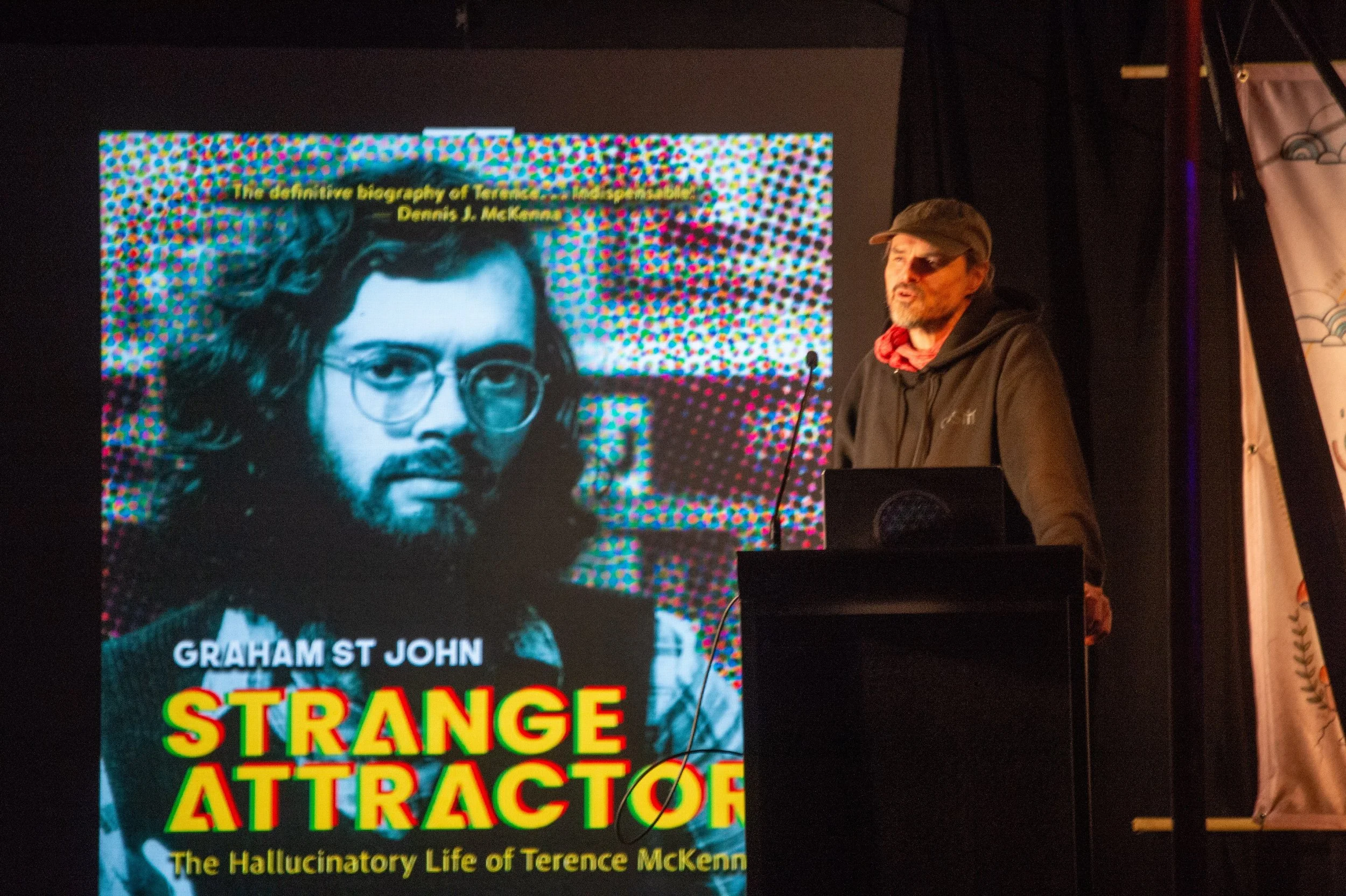
Graham St John
As the night deepened, the programme shifted fully into cinema. Short films opened the evening before Forest Country by Lewis Haskins screened during the dinner break, feeling less like a standalone work and more like an extension of the surrounding landscape.
Later, The Poison Garden by Adele Wilkes unfurled hypnotically over thirty minutes, returning the focus to plants. Filmed, written, edited, and scored by Wilkes and her collaborators, the experimental film is an impressive creative feat.
Its structure and clean visuals paired elegantly with psychedelic ambient score and information-rich conversations recorded with collaborators whose identities felt as mythical as the work itself.
If The Poison Garden was composed and deliberate, then WTF: A Psychedelic Cinema Flashback, curated by Rich Haridy, went in the opposite direction. A rapid collage of clips, memes, and late-twentieth-century television detritus, it did exactly what it promised in the tin. WTF.
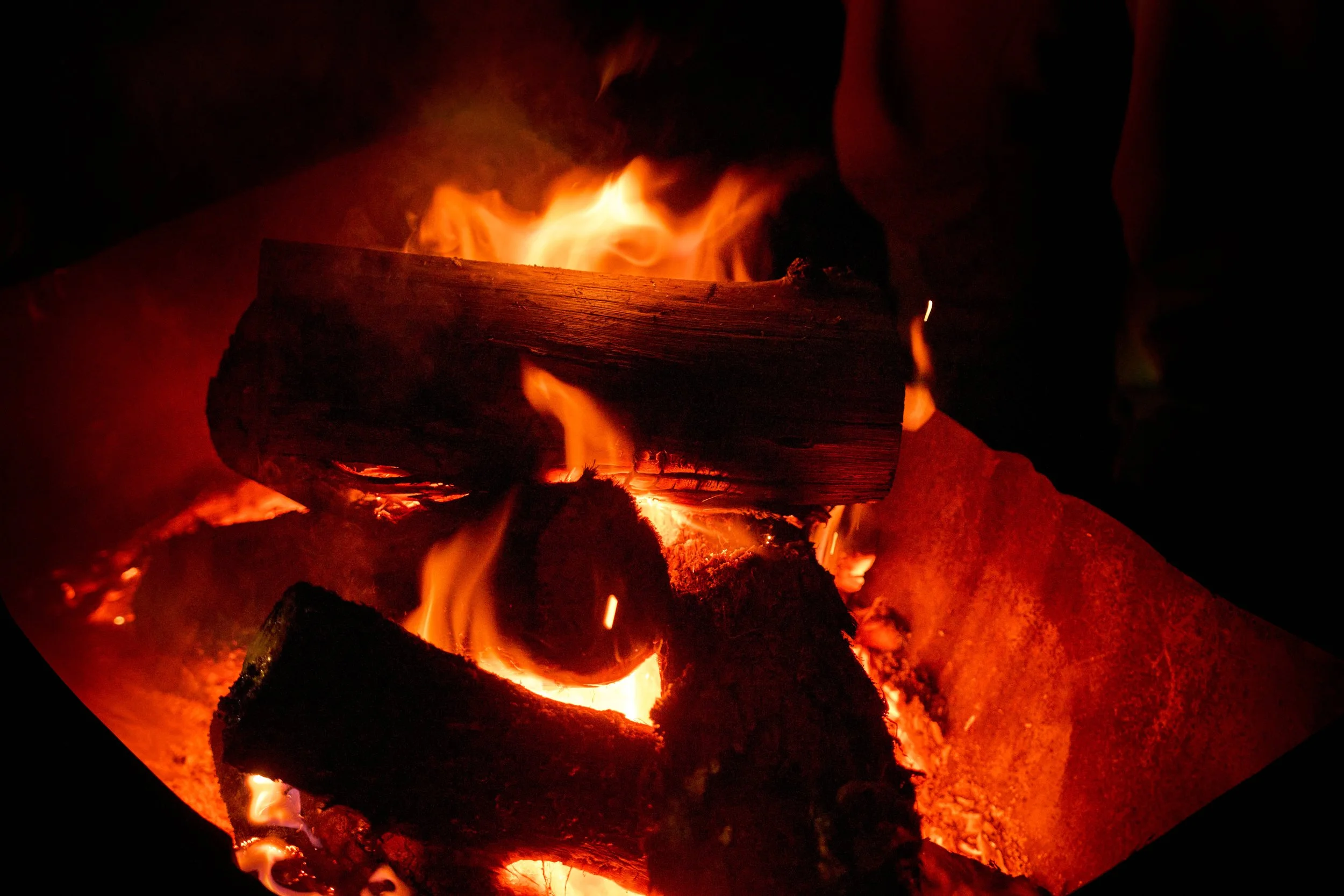
Beside the Night Owls building, a fire burned, drawing people in from the cold as faint electronic music frequencies wafted out from the inside. The Night Owls programme continued with audiovisual sets from Samiam, Lysdexic, Groovey Boots, Mickey Space, and Kundalini, accompanied by liquid light and live visuals.
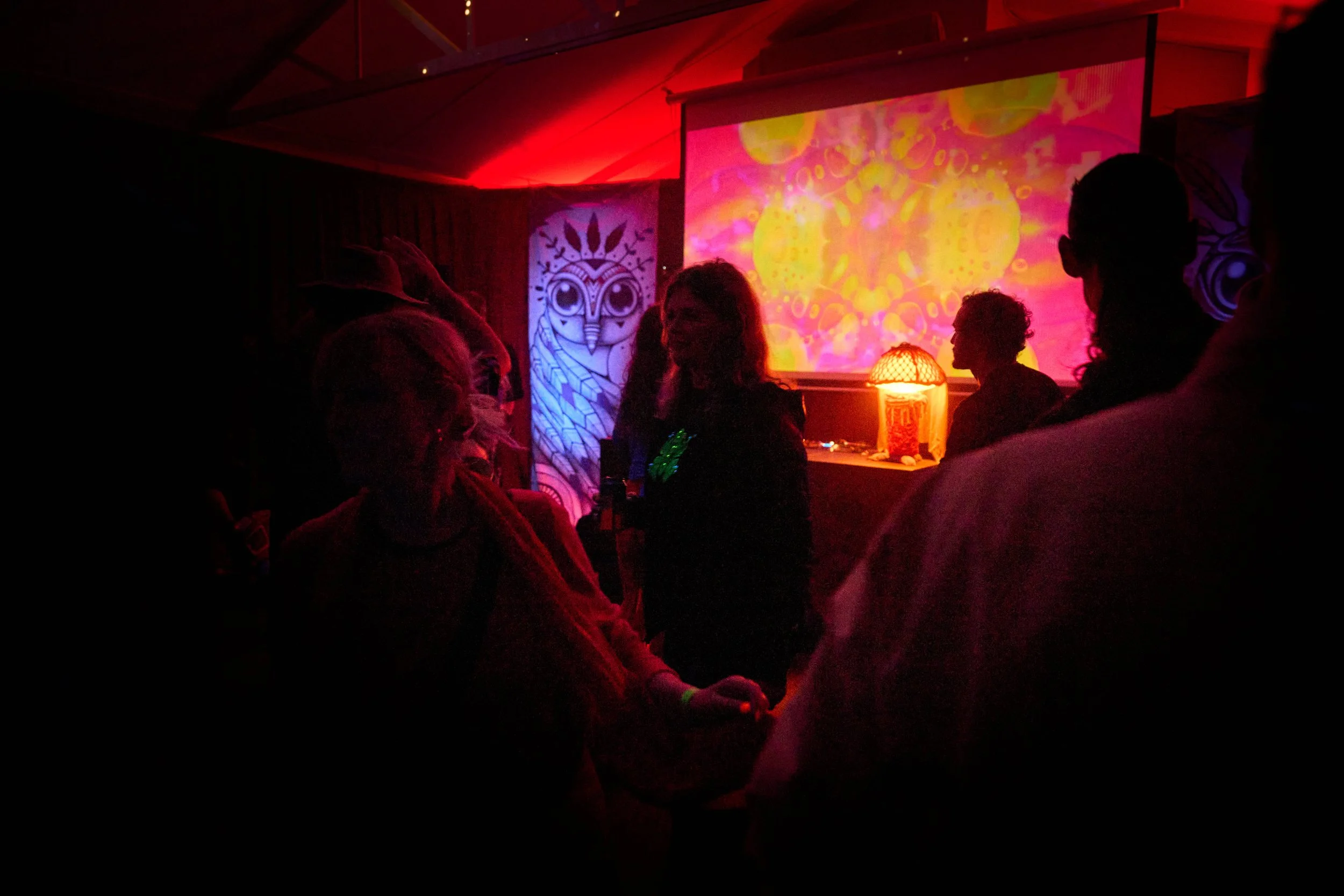
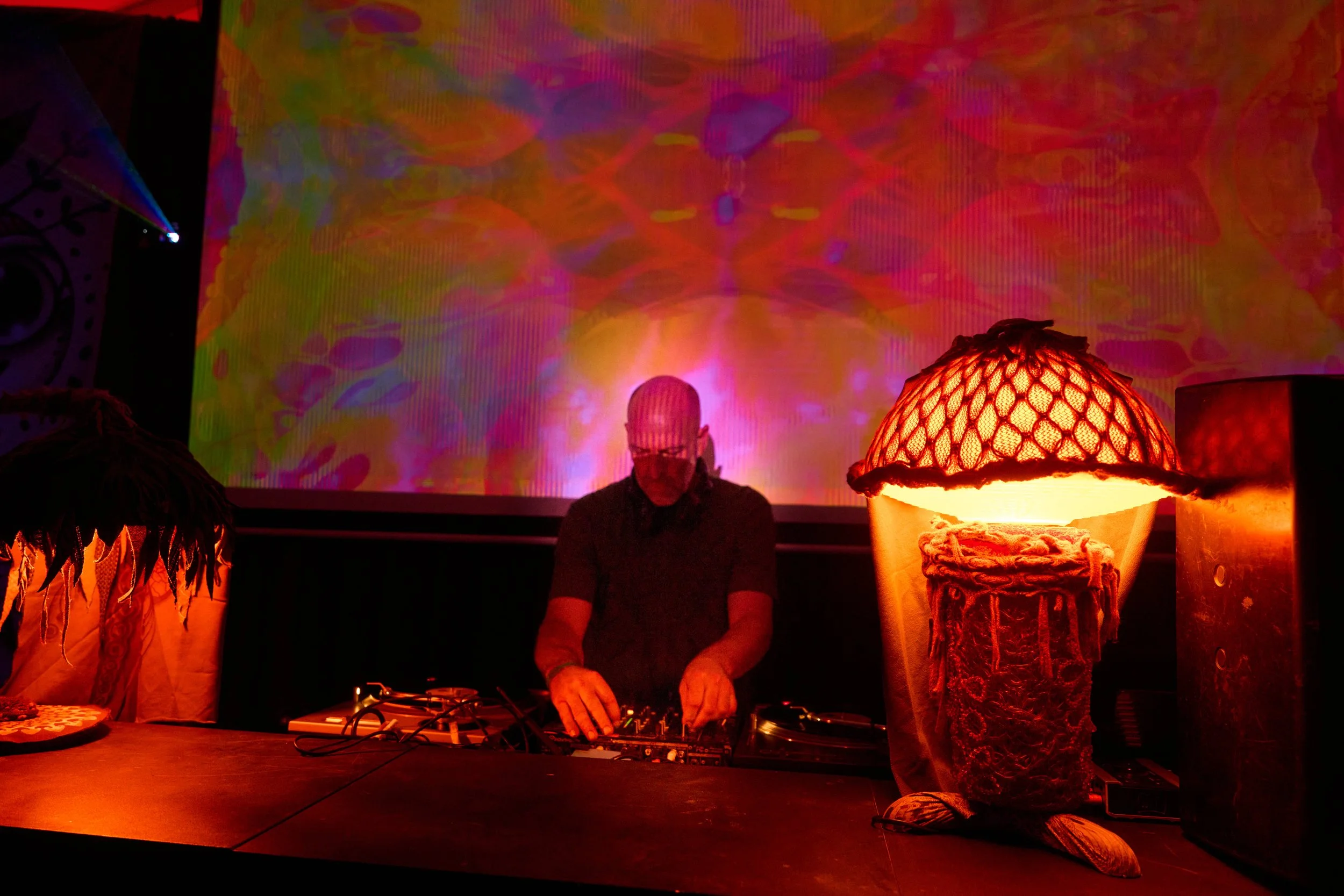
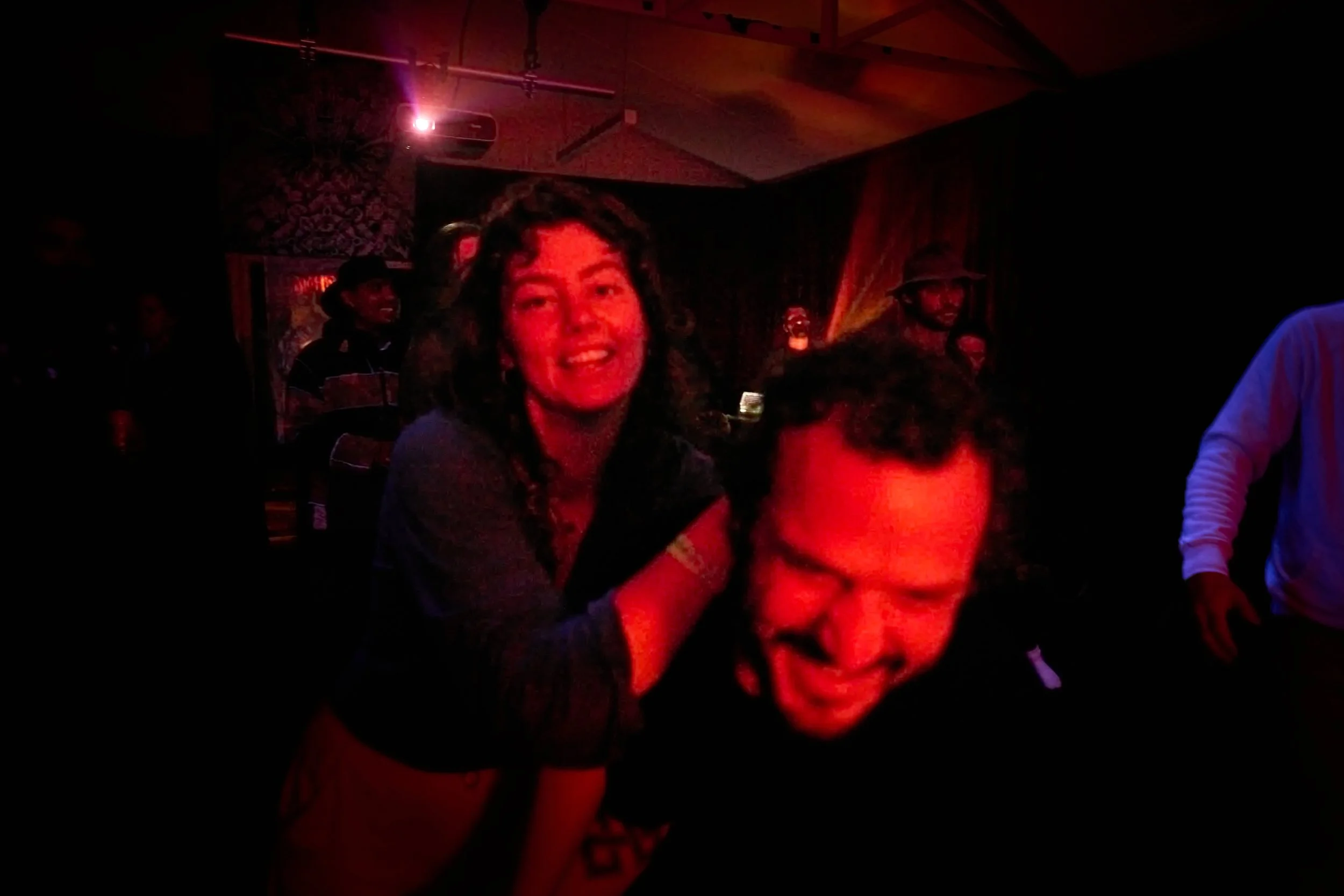
The music shifted from glitch-hop to deep progressive, through breakbeats and into old-school psychedelic techno and trance. As neon light fragments slid across the walls, someone leaned over and said, “Fuck yeah, he’s playing vinyl.” The DJ: Groovey Boots. The look on his face suggested playing on anything else would be sacrilegious. A purist. Nice.
It felt like a good way to end the night.
MONDAY
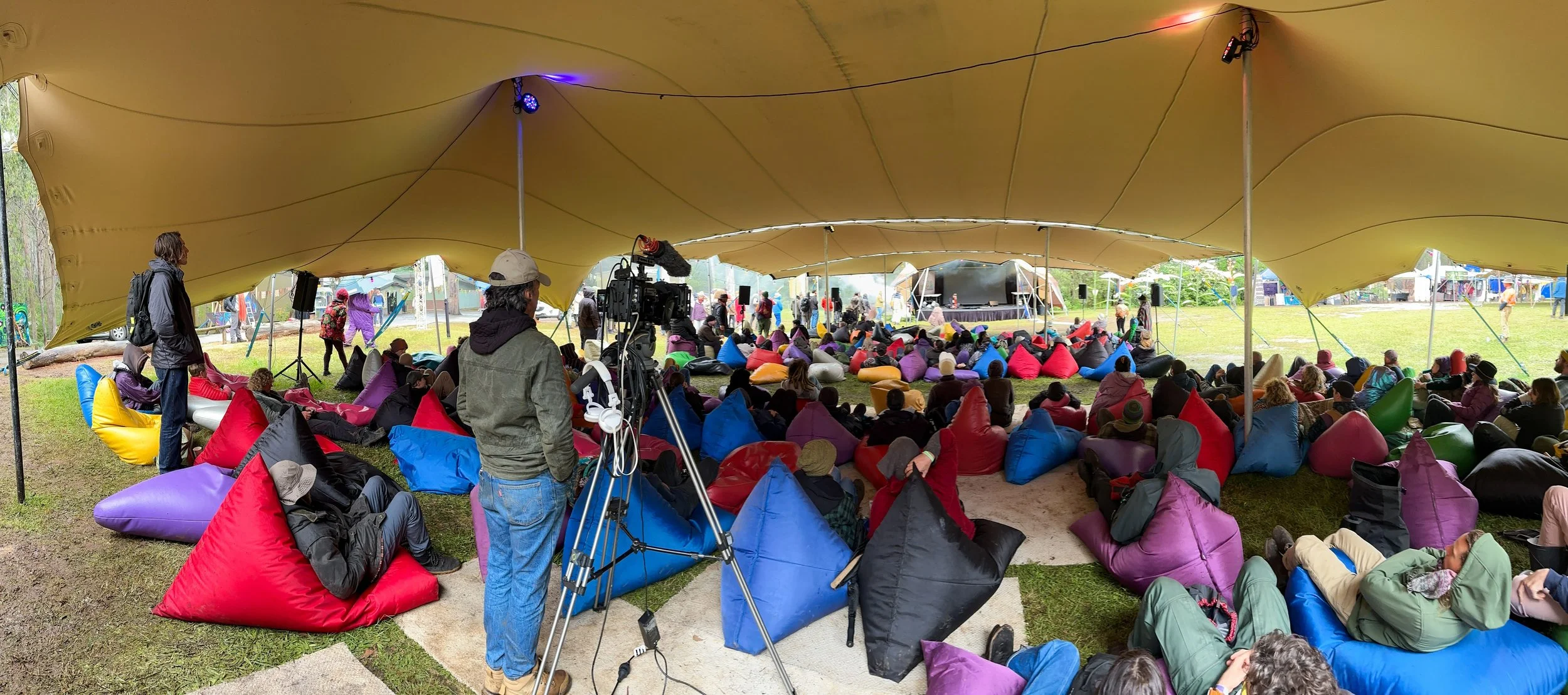
Monday moved at a different pace. There were no big builds or dense runs of talks, just space to land and get ready to leave. The Gembrook air felt sharper than it had all weekend, clouds rolling in faster and heavier than before.
The morning opened with Grok3, an ambient audiovisual collaboration by VJ Mandala and DJ Krusty, easing the site toward its final stretch.
Nicola Gracie followed with a practice-led session that treated integration as an ongoing creative process rather than something to be tidied up at the end. Working through therapeutic arts, participants translated experience into form, keeping things practical and personal.
Melissa Warner and Alana Roy explored tools for psychedelic self-discovery and clinical practice through embodied leadership, staying focused on navigation, return, and responsibility rather than peak states.
Lee Miles closed out the sessions by unpacking the science behind roadside drug testing, explaining how saliva detection works, where it falls short, and what it actually measures. It was a useful counterpoint to the weekend’s broader themes, grounding them in everyday legal reality.
Alongside this, the Seeding Stage continued quietly, focused on integration, propagation, and practical care. It was less about taking on new material and more about preparing people to carry what they already had back into daily life.
By late morning, everyone gathered at the main stage for the Closing Ceremony. Eva Guest opened with meditative, loop-based vocalisations that built gradually, drawing the room together.
Co-founder Martin Williams offered a brief closing address, thanking the crew and community who made the gathering possible. Uncle Mark Brown then guided the remainder of the ceremony, marking the end of the weekend.
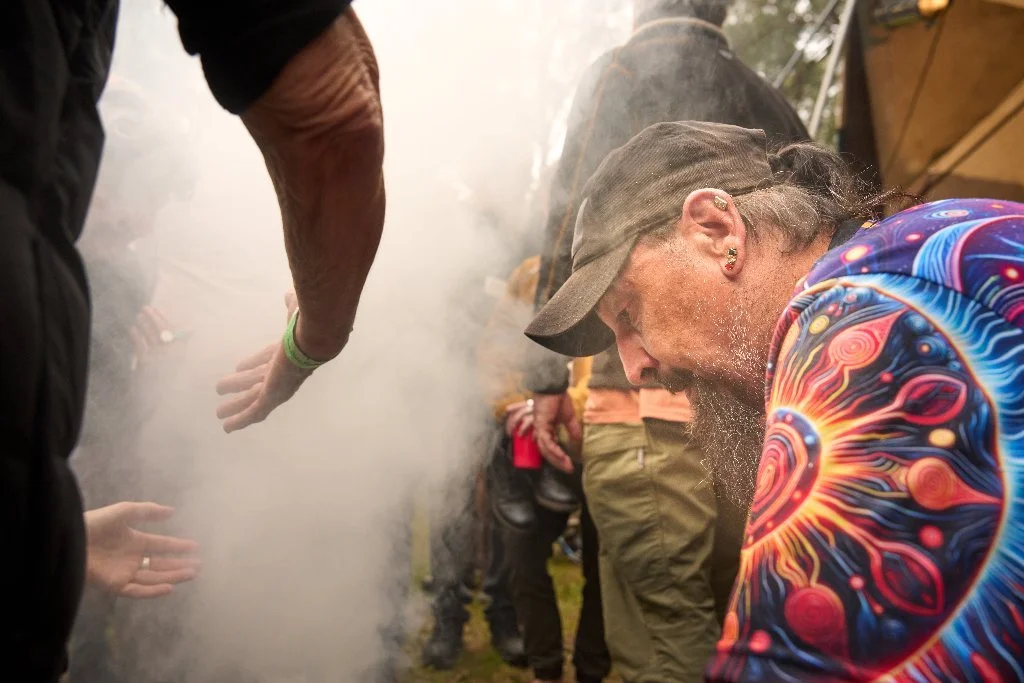
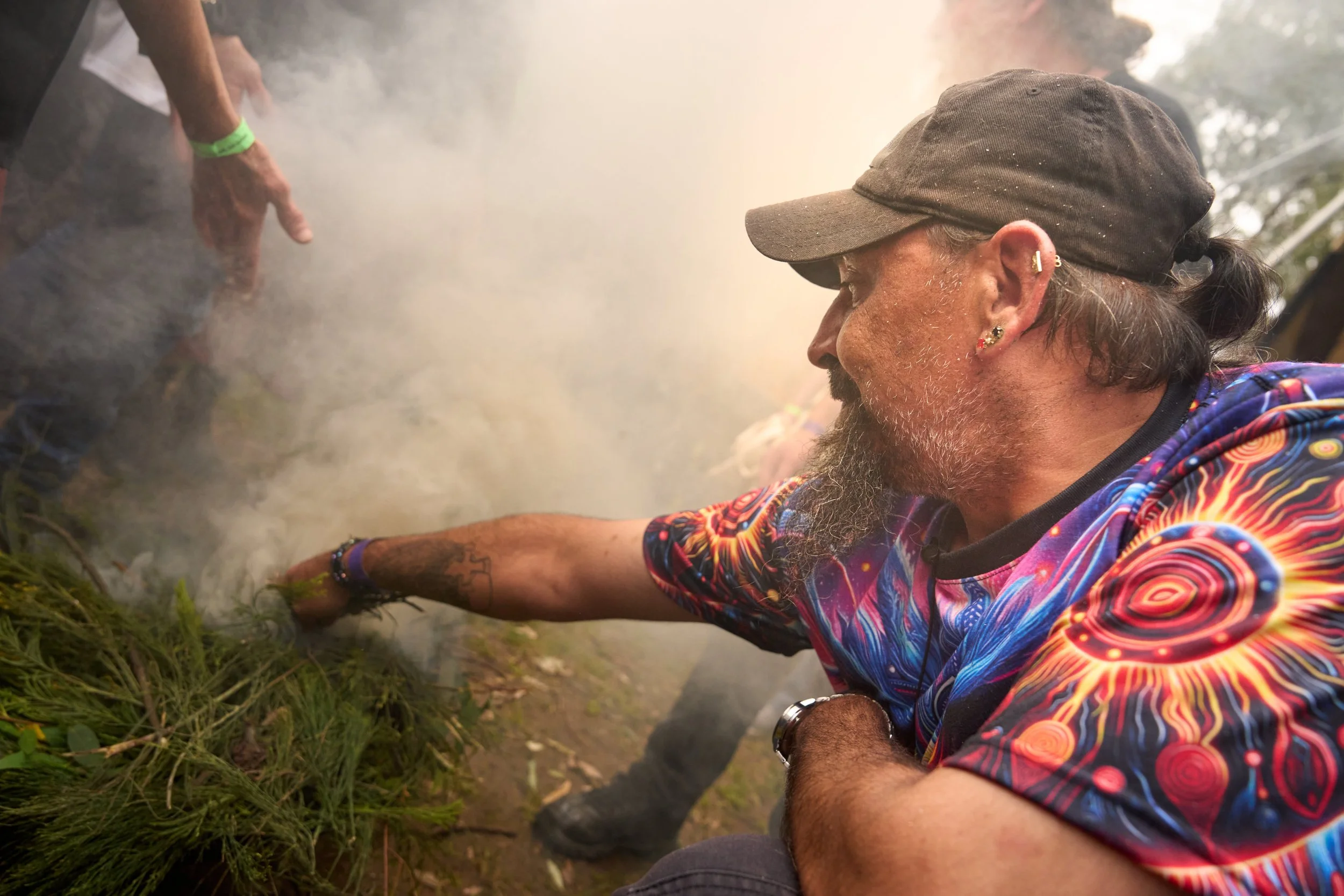
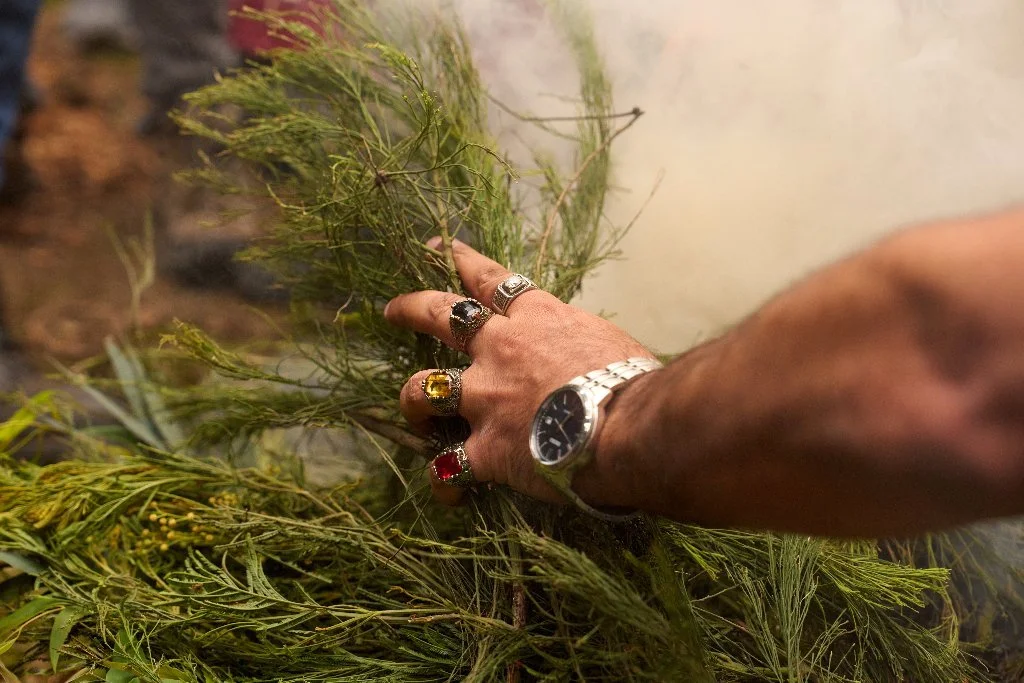
An invitation was extended to rinse in the smoke of the sacred fire. People lined up. Everyone took their turn.
By early afternoon, tents were coming down and the site began to thin out.
It’s worth mentioning that alongside the main program, Garden States also made space for the next generation through the Little Seeds children’s program. Young attendees and their families were invited to engage with the bushland environment through hands-on activities, from building miniature ecosystems and creating sunprint art to joining guided nature walks. This playful, educational space complemented the adult program, extending Garden States across generations and reinforcing EGA’s commitment to environmental education, community wellbeing, and long-term ecological stewardship.
If Garden States set out to encourage discourse, in the broadest sense of the word, it did so without forcing the point. As people packed up and headed home, there was a quiet sense of reset. Something had settled. We left changed, a shared sense of having spent time paying attention, learning carefully, and being in conversation with people and place.
We left regenerated with novel knowledge.
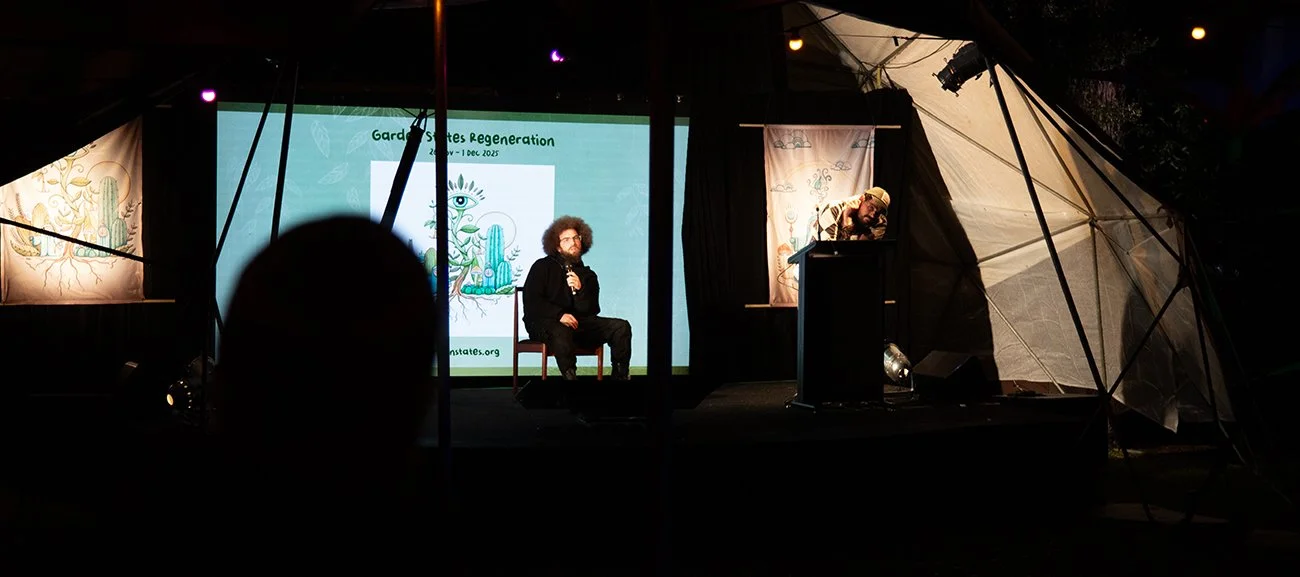
David Nickles and Rich Haridy - ‘Not talking about the DEA’
written by Walter Juan